
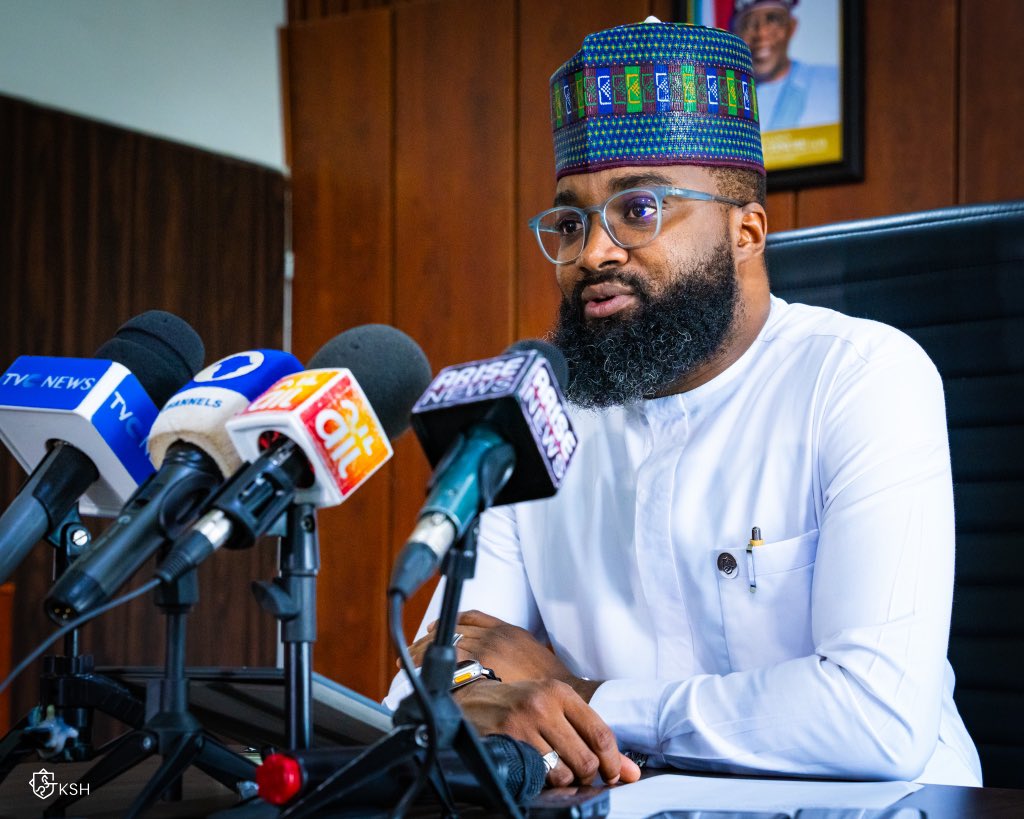
Today marks three years since I assumed office as the Executive Vice Chairman and Chief Executive Officer of the National Agency for Science and Engineering Infrastructure (NASENI).
When I took office in September 2023, the mandate from President Bola Ahmed Tinubu was to reposition NASENI as Nigeria’s primary technology-transfer agency and turn its research and engineering capacity into practical solutions for national development.
Nigeria has never lacked ideas, talent or demand. Our challenge has been the weak connection between research, manufacturing, skills, finance and markets. Too many promising innovations have remained in laboratories. Too many capable engineers have lacked the facilities to build at scale. Too many technologies that could be produced locally have continued to be imported.
Closing this gap has defined our work over the past three years.
We began by reforming NASENI from within. We strengthened governance, introduced clearer project and implementation management structures, linked budgets to measurable deliverables, digitised key processes and established a stronger culture of performance and accountability.
This institutional foundation was necessary because NASENI could not drive twenty-first-century industrialisation with outdated systems.
Our work is guided by three principles: Creation, Collaboration and Commercialisation.
We create and adapt technologies that respond to Nigeria’s needs. We collaborate with institutions that bring expertise, investment, technology or market access. We commercialise viable innovations so they can become useful products, sustainable businesses, functioning factories and jobs.
The objective is not to execute isolated projects. It is to build a connected industrial system.
InnovateNaija identifies promising ideas from across the country. The NASENI Innovation Hub helps innovators develop them. The Research Commercialisation Grant Programme supports applied research with market potential. NASENI HoldCo provides a pathway for commercially viable technologies to operate under market discipline. Our Showroom connects production-ready solutions with investors, procurement institutions and the public.
Each platform addresses a different stage of the journey from invention to industry. Together, they form a pipeline that helps prevent Nigerian ideas from ending as prototypes.
The same thinking guides our manufacturing investments.
The 40-hectare Solar Industrial Park in Gora, Nasarawa State, is being developed to support solar research, manufacturing, testing and deployment. NASENI DevFrontier is advancing the local production of solar streetlights, while NASRacks is being established to manufacture solar mounting structures with a planned annual capacity of 50 megawatts.
These interventions are designed to move Nigeria beyond installing imported solar systems towards building greater ownership of the solar value chain.
At the Centre of Excellence for Precision Manufacturing in Abuja, we are developing the capacity to produce high-accuracy components for aerospace, defence, automotive, renewable energy, electronics and medical-device industries. Precision manufacturing is important because a country cannot build advanced products if it must import every critical component.
The electric vehicle assembly facility being developed at Abuja Technology Village will support the production of electric vehicles, including the NASENI Electric Keke. Alongside this, our CNG conversion and reverse-engineering centres are building local technical capacity for Nigeria’s transition towards more affordable and cleaner transportation.
The NASENI–Troment Rapid Diagnostics Factory is strengthening Nigeria’s capacity to manufacture essential medical diagnostic products locally. Our fertiliser manufacturing project in Kano is transferring production knowledge into Nigeria, while the Irrigate Nigeria Project is deploying solar-powered irrigation technology to support year-round agricultural production.
Through the National Asset Restoration Project, idle tractors and other public machinery are being refurbished and returned to productive use. This protects previous public investment, supports agricultural mechanisation and reduces the need to replace equipment that can still serve Nigerian farmers.
Industrialisation, however, is not only about factories and machinery. It is also about people.
A factory needs engineers. A solar system needs trained technicians. An innovation hub needs entrepreneurs. Advanced manufacturing requires designers, machinists, researchers and quality-control professionals. We cannot build industrial infrastructure today and begin searching for the people to operate it tomorrow. Both must be developed together.
That is why FutureMakers introduces children between the ages of five and sixteen to science, engineering and problem-solving. Our Skills Acquisition Centres provide practical technical training across several states. SheFly prepares women to apply drone technology in agriculture, mapping, data collection and environmental monitoring. DELT-Her provides grants, mentorship and commercialisation support to female engineers.
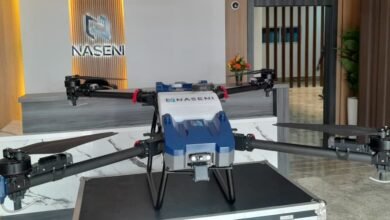
The UAV School by NASCAV at the Air Force Institute of Technology in Kaduna is also developing local expertise in drone design, assembly, operation, maintenance and recovery for defence, agriculture, surveillance, mapping and industrial applications.
The Sustainable and Emerging Technologies Institute at Bayero University Kano is being developed to connect academic research, emerging technology, industry requirements and enterprise development. The wider NASENI Innovation Campus planned for the Federal Capital Territory will bring research, product development, advanced manufacturing, startup incubation, testing and skills development into one integrated environment.
Across these sectors, we have developed and introduced more than 100 products and established over 50 local and international partnerships. But the significance of our work cannot be measured only by the number of products, projects or agreements announced.
The real test is whether products achieve market adoption, factories operate sustainably, partnerships transfer useful capabilities, trainees secure livelihoods, local suppliers participate in production and Nigeria reduces its dependence on imported technologies.
That is the standard against which the next phase of our work must be measured.
Our work directly supports the Renewed Hope Agenda of President Bola Ahmed Tinubu by advancing local manufacturing, energy security, food security, healthcare resilience, human-capital development and the Nigeria First policy.
The next phase will focus on scale, standards and measurable outcomes. We must increase local content, strengthen certification and quality systems, expand factory utilisation, improve market access and track the jobs, revenues, productivity gains and import savings created by every intervention.
I do not want NASENI to be remembered simply as an agency that installed equipment or launched projects. I want it to be recognised as the institution that helped Nigeria build the capacity to manufacture what it needs.
The work is still in progress. Some factories are producing, while others are being established. Some products are already in the market, while others are moving through testing and commercialisation. The foundations have been laid, but the scale Nigeria requires will demand sustained execution, private-sector participation and long-term commitment.
Three years on, our purpose remains clear: to connect Nigerian ideas with Nigerian industries and transform science and engineering into productive capacity, economic value and better opportunities for our people.
Nigeria’s industrial future will not be built through aspiration alone. It will be built through functioning institutions, capable people, competitive products and factories that produce.
That is the system we are building at NASENI.
Khalil Suleiman Halilu Executive Vice Chairman/Chief Executive Officer National Agency for Science and Engineering Infrastructure