
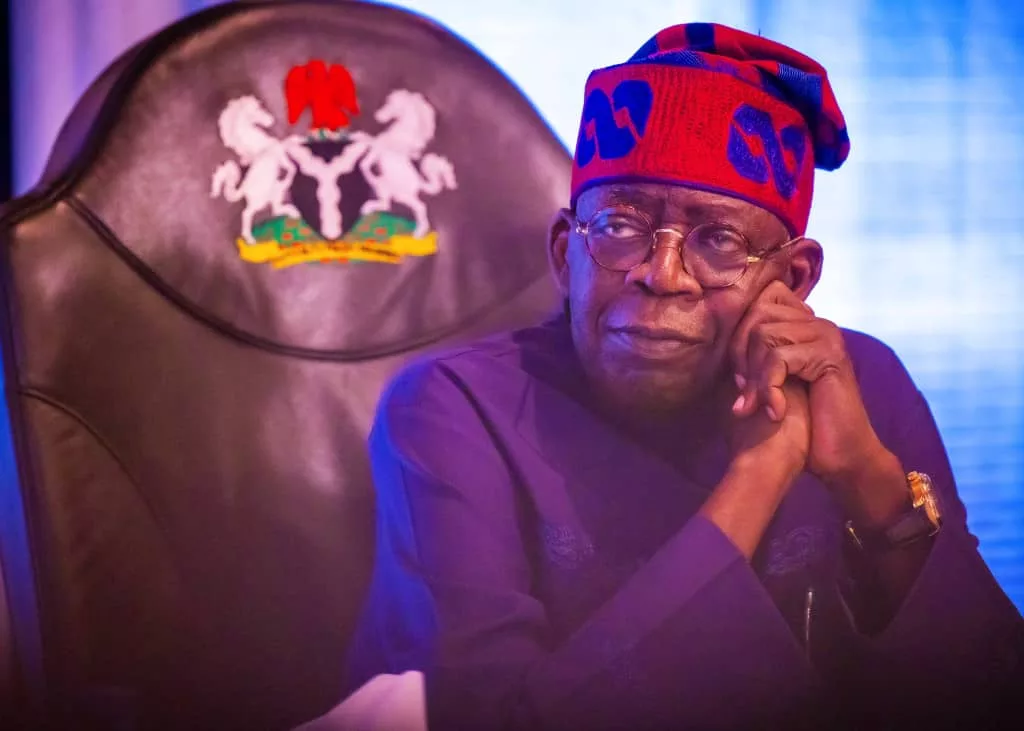
When President Bola Ahmed Tinubu announced the removal of fuel subsidy on May 29, 2023, the decision sparked intense national debate. Combined with the administration’s exchange-rate reforms, including the floating and subsequent stabilization of the Naira, the policy marked one of the most significant economic shifts in Nigeria’s recent history. Three years later, the clearest evidence of the impact of these reforms are not to be found in Abuja, but in the finances of Nigeria’s 36 states.
The numbers tell a compelling story.
In May 2023, the total monthly allocation distributed to the 36 states through the Federation Account Allocation Committee (FAAC) stood at N343.08 billion. By April 2026, that figure had risen to N708.18 billion. In just under three years, aggregate monthly allocations to states increased by more than 106 per cent.
More striking is the fact that every state in the federation recorded an increase. The average gain across states was approximately 128 per cent, meaning that many states more than doubled—and in some cases nearly tripled—their monthly allocations.
This transformation is largely the fiscal dividend of two major reforms: the removal of fuel subsidy and the restructuring of the foreign exchange regime.
For years, fuel subsidy consumed hundreds of billions of Naira monthly, with estimates placing the cost at over N400 billion at its peak. Resources that would otherwise have flowed into the federation account were absorbed by subsidy payments. The result was a federation in which states frequently struggled with limited revenues, delayed projects, and mounting obligations.
The removal of the subsidy changed that equation. Revenue previously spent sustaining an unsustainable subsidy regime became available for distribution among the federal, state and local governments. At the same time, foreign exchange reforms improved government revenues from oil exports and other dollar-denominated earnings, strengthening the pool of funds available for allocation.
The result is a significantly stronger fiscal position for virtually every state government.
Perhaps nowhere is this more evident than in Lagos State. Monthly allocations rose from N11.5 billion in May 2023 to N40.5 billion in April 2026—an extraordinary increase of 252 per cent. While Lagos already enjoys the strongest internally generated revenue base in the country, the sharp increase in federal allocations has further enhanced its capacity to finance major infrastructure projects, including rail expansion, road rehabilitation and urban drainage systems.
The story is equally significant in states that historically operated with far more limited resources. Many non-oil-producing states that received between N5 billion and N7 billion monthly in 2023 now receive between N13 billion and N17 billion. States such as Ogun, Taraba, Osun, Plateau, Kogi and Abia fall within this category, reflecting gains ranging from roughly 130 to 165 per cent.
For these states, the increase fundamentally alters their fiscal capacity. A state moving from N6 billion to N15 billion monthly is no longer confined to merely paying salaries and pensions. It gains room to invest in roads, schools, healthcare facilities and other critical infrastructure while still meeting recurrent obligations.
The effects are already visible across the federation. Larger allocations have enabled states to accelerate infrastructure development, undertake urban renewal programmes, and improve public service delivery. In the health and education sectors, governments now possess greater capacity to upgrade primary healthcare centres, recruit teachers, and revive scholarship programmes that had been constrained by limited resources.
Northern economic powerhouse Kano State offers another illustration. Its monthly allocation rose from N10.2 billion in May 2023 to N24.4 billion in April 2026—an increase of 139 per cent. Such growth provides significantly greater fiscal space for industrial development, infrastructure expansion and commercial revitalization initiatives.
Similarly, Oyo State’s allocation climbed fromN8.5 billion to N21.5 billion, a 153 per cent increase. The enhanced revenues align with the state’s extensive road construction and urban renewal projects across Ibadan and other major centres.
Even in the Niger Delta, where political developments have often dominated headlines, the fiscal picture has strengthened considerably. Rivers and Bayelsa States recorded increases of 66 per cent and 85 per cent respectively, providing additional resources for infrastructure and youth-development programmes.
The conclusion is difficult to avoid. While debates over economic reforms will continue, the fiscal condition of Nigeria’s states has improved markedly since 2023. The combination of subsidy removal and exchange-rate reforms has expanded the revenue available to sub-national governments, giving them more resources than at any point in the history of our country.
The challenge now is no longer primarily one of revenue scarcity. It is one of governance, accountability and effective deployment of these resources. For the first time in many years, most states possess the fiscal means to pursue meaningful development. The measure of success going forward will be how effectively they convert this unprecedented increase in revenue into tangible improvements in the lives of their citizens.
— Chinedu Offor is a developmental economist and writes from Imo State