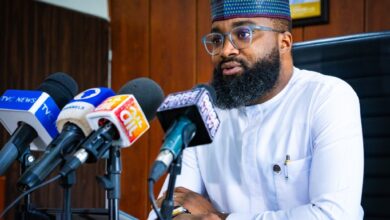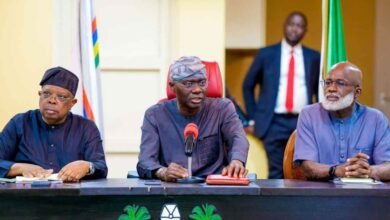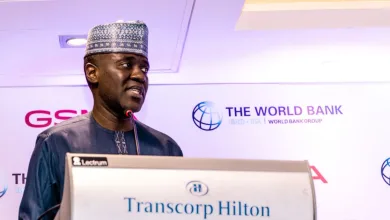

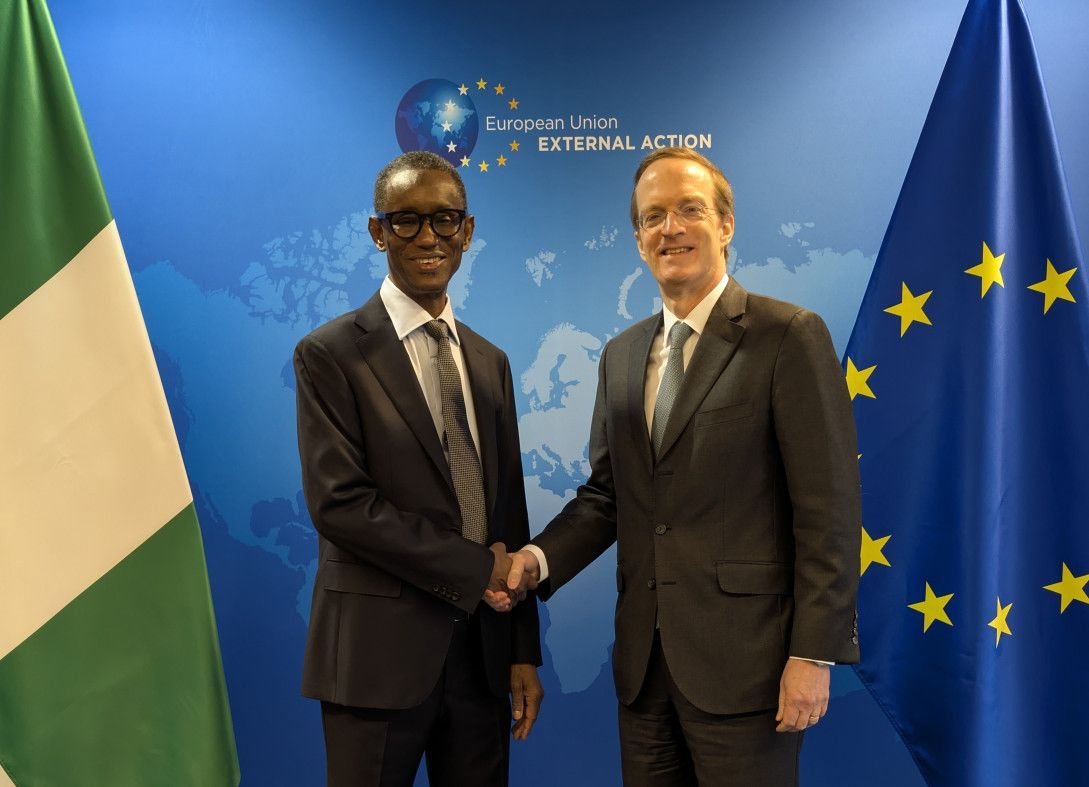
Nigeria’s National Security Adviser, Nuhu Ribadu, on 18 February led the country’s delegation to Brussels for the inaugural European Union–Nigeria Peace, Security and Defence Dialogue, marking a significant milestone in bilateral relations and opening a new high-level platform for structured cooperation on peace, security and defence with the EU.
The Dialogue, held at the headquarters of the European External Action Service (EEAS), was co-chaired by EEAS Deputy Secretary-General Charles Fries and Mal. Ribadu. It focused on regional security developments and key thematic areas including counter-terrorism, maritime security, cyber and hybrid threats, disarmament, demobilisation and reintegration (DDR), and peace mediation. Both sides identified concrete opportunities for enhanced collaboration in response to evolving security dynamics in Nigeria and the wider region.
The meeting is an important step in strengthening EU–Nigeria relations and sets the stage for deeper cooperation by launching new areas of engagement and reinforcing joint efforts. During the meeting the European Union signalled its readiness to scale up support to Nigeria, while fully respecting the country’s sovereignty.
A second segment of the Dialogue, led by DG HOME Deputy Director-General Johannes Luchner, addressed transnational organised crime, with discussions covering drug trafficking, trafficking in human beings and migrant smuggling. Nigeria, led by Mal. Nuhu Ribadu welcomed proposals to strengthen law enforcement cooperation with Europol, in response to the growing threat of organised crime affecting both Nigeria and EU member states.
The Dialogue also reaffirmed broad convergence between Nigeria and the EU on shared values and international priorities, including support for multilateralism and the rules-based international order.
Nigeria’s central role in West Africa’s stability also featured prominently in discussions. As Africa’s most populous country and largest economy—accounting for nearly 60 per cent of West Africa’s GDP and half of its population—the meeting acknowledged that Nigeria wields considerable political and economic influence, making it an indispensable partner for the EU in promoting regional and continental security.
Several key outcomes emerged from the Dialogue, including a commitment to deepen collaboration on regional stability; strengthened joint efforts to counter terrorism and violent extremism through new support measures and strategic exchanges; enhanced cooperation on maritime security, cybersecurity and foreign information manipulation and interference (FIMI); and the launch of dedicated consultations to counter foreign information manipulation, with capacity-building initiatives to follow.
The Dialogue builds on a longstanding relationship between Nigeria and the EU. For over a decade, both sides have worked closely to tackle regional security challenges in areas such as the Lake Chad Basin and the Gulf of Guinea. EU support has combined security, humanitarian and development assistance, including DDR programmes, mediation efforts, criminal justice reform and resilience-building initiatives.
Between 2015 and 2025, EU peace, security and defence cooperation with Nigeria totalled over €700 million, complemented by an additional €500 million in humanitarian assistance. Nigeria remains the EU’s largest bilateral development partner in Sub-Saharan Africa. The EU is also the major contributor to the Multinational Joint Task Force, providing €234.4 million to date to enhance the force’s capabilities, responsiveness and coordination among participating contingents.