
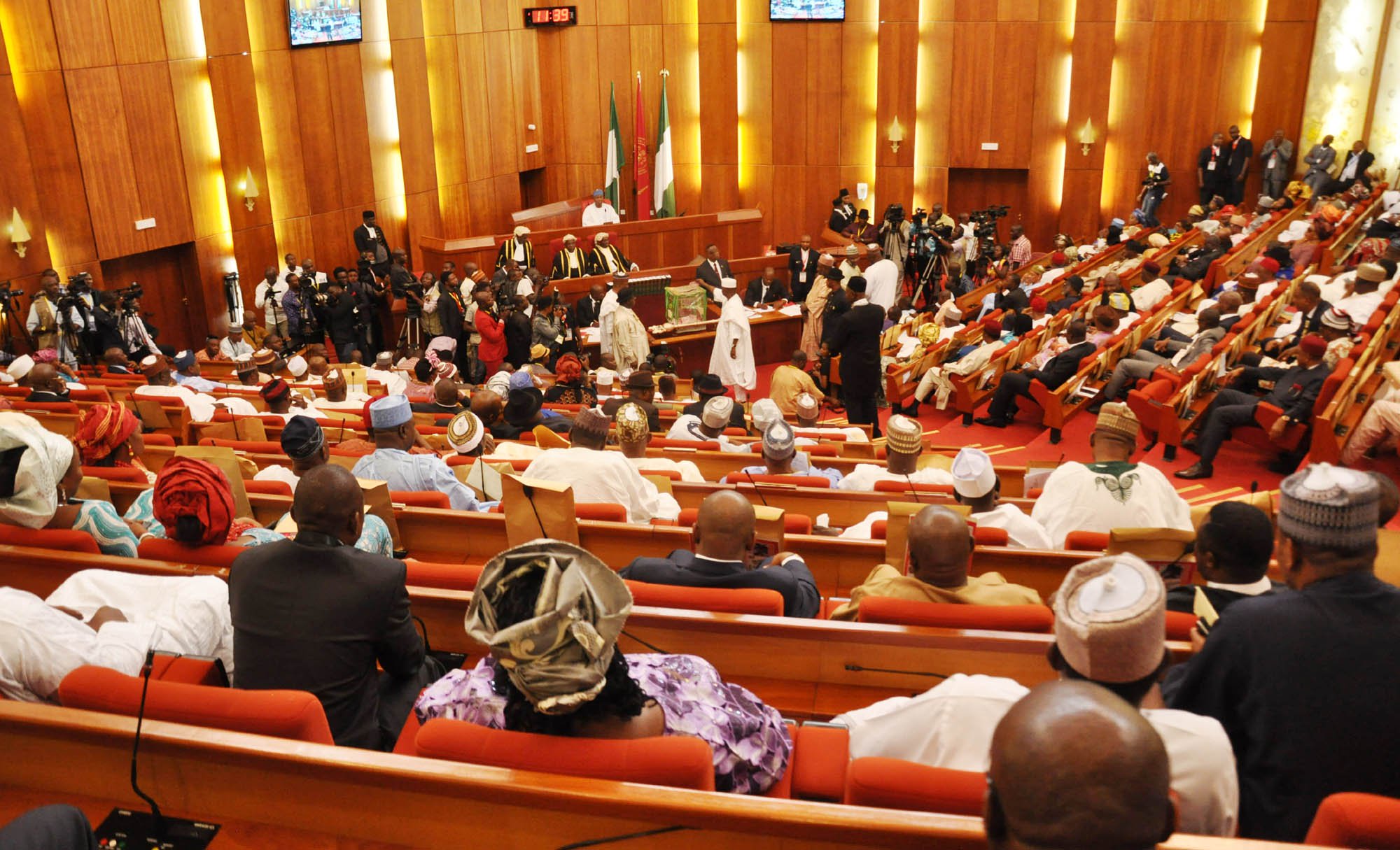
The Senate has stepped up efforts to establish state police, declaring that the constitutional amendment needed to decentralise policing across Nigeria will receive priority attention this week.
Senate Leader Opeyemi Bamidele disclosed this during a media briefing in Abuja, saying the National Assembly had resolved to fast-track the amendment process in response to the country’s worsening security situation.
According to Bamidele, the proposal now enjoys broad support from President Bola Tinubu, state governors, lawmakers and other stakeholders.
The renewed push comes amid rising concerns over terrorism, banditry, kidnappings and communal violence across the country. Recent attacks, including the abduction of pupils and teachers in Oyo State and assaults on security personnel in different regions, have intensified calls for a decentralized policing structure.
Nigeria currently operates a single national police force under Section 214(1) of the 1999 Constitution, which provides that, “There shall be a Police Force for Nigeria, which shall be known as the Nigeria Police Force.”
Bamidele, however, said stakeholders across the federation now agree that the time has come to change that arrangement.
“Our position is very clear on state police. We are standing with Nigerians on the issue of state police. All strata of the federation have made it clear that there cannot be a better time to establish state police than now,” he said.
“That is where we stand. Our responsibility is to translate the popular desire of Nigerians into reality as elected representatives of the people.
“We have resolved to pass the constitutional amendment that will make provision for state police. As of today, that process will come to fruition this week because there is no need for further delay.”
The Senate leader revealed that consultations involving the National Assembly, the Presidency and security agencies had reached an advanced stage, clearing the path for legislative action.
According to him, key meetings have taken place between the leadership of the constitutional review committees in both chambers of the National Assembly and top government officials, including the Attorney-General of the Federation, the Chief of Staff to the President and security chiefs.
“There have been a series of meetings involving the National Assembly, the Attorney-General’s office, the Chief of Staff to the President, the Inspector-General of Police and other stakeholders. That is why I can confidently say we are pursuing this matter this week,” he said.
“It will be the major issue before us. We have resolved to separate it from other constitutional amendment bills so we can vote on it as quickly as possible.”
“The bill could be on its way to the state assemblies very soon because it requires approval from two-thirds of the state legislatures before it can be presented to the President for assent.
“The President is with us on this proposal. I am sure he cannot wait for the bill to reach his desk. Most governors support it, and state assemblies are equally waiting for it. We will initiate the proposal for the creation of state police within the week,” he added.
Under Nigeria’s constitutional amendment process, any alteration to the Constitution must secure the support of at least two-thirds of both chambers of the National Assembly and receive approval from no fewer than 24 state Houses of Assembly before it can be signed into law by the President.