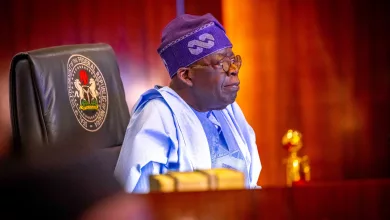

The International Monetary Fund (IMF) has commended the economic reforms implemented by President Bola Tinubu’s administration, saying they have strengthened Nigeria’s macroeconomic stability and resilience, but warned that poverty and food insecurity remain major challenges despite the gains.
The IMF Executive Board, which concluded its 2026 Article IV Consultation with Nigeria on June 1, said reforms undertaken over the past three years have improved economic outcomes, boosted investor confidence and enhanced the country’s ability to withstand external shocks.
The Fund noted that Nigeria’s economy grew by an estimated 4.0 per cent in 2025 and is projected to expand by 4.1 per cent in 2026. It also highlighted improvements in the country’s external position, with gross international reserves rising to $46 billion in 2025 from $40 billion at the end of 2024, while net international reserves increased to $35 billion from $23 billion over the same period.
“Directors commended the authorities’ reforms over the past three years that have strengthened macroeconomic stability and resilience,” the IMF said in its assessment.
The Fund credited reforms such as fuel subsidy removal, foreign exchange market liberalisation, fiscal adjustments and tighter monetary policy for helping restore stability and improve confidence in the economy.
However, the IMF cautioned that economic conditions remain difficult for many Nigerians. It said poverty has risen to 63 per cent based on the national poverty line, while an estimated 27 million Nigerians experienced food insecurity in late 2025.
The IMF warned that rising global fuel, food and fertiliser prices could worsen inflationary pressures and deepen hardship, even as higher oil prices are expected to boost export earnings and government revenues.
Inflation, which had been declining for more than a year, rose to 15.4 per cent in March 2026 as higher international fuel and food prices filtered into the domestic economy.
To address the challenge, the Fund urged the Central Bank of Nigeria (CBN) to maintain a tight monetary policy stance until inflation is firmly under control.
The IMF also called for a neutral fiscal stance in 2026, while protecting critical social and development spending. It welcomed recent tax reforms but said additional revenue measures may be required over the medium term, including to support expanded cash transfer programmes for vulnerable households.
The Board expressed concern about off-budget spending and complex financing arrangements, urging authorities to strengthen fiscal transparency, public financial management and budget accountability.
The IMF further welcomed the resilience of Nigeria’s banking sector, supported by the ongoing recapitalisation programme, and commended the country’s removal from the Financial Action Task Force (FATF) grey list.
Looking ahead, the Fund identified insecurity, governance challenges, electricity shortages, weak infrastructure and low agricultural productivity as key obstacles to inclusive growth.
Despite the challenges, the IMF maintained a positive medium-term outlook for Nigeria, saying continued reforms and sound macroeconomic policies would be essential to sustaining growth, reducing vulnerabilities and improving living standards.