

There is a certain romanticism about industrialisation in Nigeria. It is the idea that a truly industrialised country must manufacture everything it consumes, from the smallest household appliance to the most sophisticated automobile. That every component must be produced locally, every raw material sourced domestically, and every finished product carry the unmistakable identity of an entirely Nigerian production process.
It is an attractive ambition. It speaks to national pride, economic independence and the desire to break free from decades of dependence on imported goods. But it also raises an important question: Must a country manufacture everything to become an industrial power?
For Khalil Suleiman Halilu, the Executive Vice Chairman and Chief Executive Officer of the National Agency for Science and Engineering Infrastructure (NASENI), the answer is no.
Halilu has consistently advanced a different argument about Nigeria’s industrial future. His position is that industrialisation must be strategic, commercially sensible and grounded in the realities of modern global production. Rather than attempting to manufacture everything at once, Nigeria should identify where it possesses competitive strengths, concentrate its resources on developing those capabilities, and participate intelligently in the global manufacturing value chain.
It is an argument that challenges conventional thinking about industrial development. More importantly, it is one that NASENI is beginning to translate into practical industrial activity.
Consider the iPhone. It is one of the most commercially successful consumer products in modern history. Designed by Apple, an American company headquartered in California, the iPhone is also a remarkable illustration of how industrial production has evolved beyond national borders.
Its design, product architecture and software ecosystem are largely developed in the United States. Its components come from a network of suppliers operating across several countries. Its sophisticated chips depend on specialised semiconductor manufacturing capabilities, particularly in Taiwan. Other components and technologies originate from companies in South Korea, Japan, the United States and elsewhere. Final assembly takes place principally in China, with India playing an increasingly important role.
No single country produces everything that goes into an iPhone. Yet the finished product is unmistakably Apple’s, and the company captures substantial value from the design, technology, software, brand and commercial ecosystem surrounding it.
The lesson here is profound. America does not need to assemble every iPhone to retain its leadership in the product’s development. Taiwan does not need to own the Apple brand to benefit from manufacturing advanced chips. China does not need to design the iPhone to derive economic value from assembling millions of devices. India does not need to manufacture every component before participating in the production process.
Each economy contributes according to its capabilities, infrastructure, industrial expertise and commercial advantages. This is the logic of modern industrial specialisation. Countries no longer need to dominate an entire production chain to become indispensable participants in it.
And this is the principle at the heart of Halilu’s industrialisation argument: Industrialization is not about doing everything, it is about doing teh right things. For decades, Nigeria’s industrial ambitions have often been framed around import substitution: producing domestically what the country previously purchased from abroad.
There is considerable merit in this approach. Domestic production can create employment, conserve foreign exchange, develop technical expertise and strengthen economic resilience. But import substitution becomes problematic when it is pursued without regard for production costs, economies of scale, technological capabilities or commercial sustainability.
A country that insists on manufacturing every component of a product, even when doing so is prohibitively expensive, may end up producing goods that are neither affordable nor competitive. This is where Halilu’s argument becomes particularly relevant.
The economic principle of comparative advantage suggests that countries benefit from concentrating on activities in which they have relatively lower opportunity costs, while trading for other goods and services. In modern manufacturing, this principle increasingly operates within products themselves, as countries specialise in particular stages of production.
For Nigeria, the practical implication is that industrial development should not be judged solely by how many products can be manufactured entirely within its borders. It should also be measured by how much value Nigerian industries can create, how many jobs they can sustain, how much expertise they can develop, and how competitively they can participate in domestic and international .arkets.
Nigeria has a large domestic market, a youthful population, significant agricultural resources, growing engineering talent and substantial demand for manufactured goods. These are advantages that can support industrial development if they are deliberately organised around viable production opportunities. Rather than dissipating limited resources across industries where Nigeria has yet to develop the requisite capabilities, the country can build strength in areas where its market, labour force, resources and emerging technological capacity provide a credible foundation.
It can then deepen those capabilities over time. Industrialisation, in this understanding, is not a competition to manufacture the greatest number of products. It is a strategy for capturing the greatest possible economic value. And that distinction matters enormously for a developing economy seeking to industrialise under significant financial, infrastructural and technological constraints.
Under Halilu’s leadership, NASENI is increasingly positioning itself as an institution that connects scientific research, engineering capability and industrial production. The agency’s approach recognises that an invention sitting in a laboratory is not necessarily an industrial achievement. Neither is a prototype that never reaches the market. The real test is whether research can become a commercially viable product, whether engineering can support production at scale, and whether those products can meet the needs of consumers, businesses and public institutions.
This explains NASENI’s growing emphasis on assembly, manufacturing partnerships, technology transfer and commercialisation.
Consider the automotive sector. Nigeria has a significant market for vehicles, but establishing an entirely domestic automotive supply chain, from engine components and semiconductor systems to transmissions and sophisticated electronics, would require enormous capital, specialised expertise and decades of industrial development.
That does not mean Nigeria must wait until it possesses all those capabilities before participating meaningfully in automobile production.
Through vehicle assembly and partnerships with technology and manufacturing companies, NASENI is demonstrating an alternative pathway: begin with the capabilities that can be established commercially, develop local technical expertise, create employment, and progressively expand domestic participation in the production process.
The same philosophy applies to the agency’s work involving agricultural machinery, renewable energy systems, electrical equipment and household products. Nigeria does not necessarily need to manufacture every motor, circuit board, battery cell or electronic component before it can develop industries around these products. What matters is establishing a viable production ecosystem in which Nigerian engineers, technicians, suppliers, distributors and businesses increasingly participate.
An assembly facility, properly structured, is more than a place where imported parts are fitted together. It can become a centre for technical training, quality assurance, maintenance expertise, supplier development, product adaptation and industrial learning.
While assembly alone does not guarantee industrialisation, its long-term value becomes unearthed when it creates the conditions for deeper domestic capabilities.
NASENI’s model today can be assessed not by the number of vehicles or appliances it assembles, but by the industrial capabilities it is building around them.
Are Nigerian engineers acquiring new skills? Yes. Are local suppliers being integrated into production? Yes. Are domestic businesses producing components, packaging and supporting materials? Yes. Are the products commercially competitive? Yes. Is the country developing expertise that can eventually support more sophisticated manufacturing? Absolutely, YES!
And there is an additional dimension to NASENI’s work that strengthens Halilu’s argument: the opportunity to build industrial capabilities in sectors where Nigeria has clear and growing demand.
In renewable energy, for example, the country has a substantial need for solar systems, batteries, inverters and related equipment. NASENI’s work on solar home systems, solar irrigation pumps and the development of a solar industrial park provides an opportunity to build domestic capacity around a market that already exists.
In agriculture, the agency’s development of irrigation equipment and agricultural machinery speaks directly to the needs of a country seeking to improve food production, reduce post-harvest losses and modernise farming.
In healthcare, its collaboration with Troment Biotechnologies on a rapid diagnostic kit factory offers another illustration of how partnerships can help develop local production capabilities in strategically important sectors.
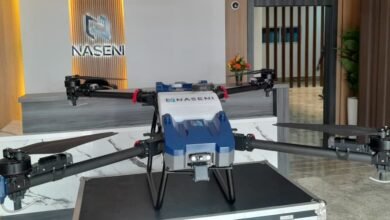
There is also the agency’s work on unmanned aerial vehicles. Halilu has stated that NASENI has assembled more than 2,500 drones, demonstrating the potential to develop domestic expertise in an industry with applications in security, agriculture, mapping and infrastructure monitoring.
These activities share an underlying philosophy. Nigeria can begin by participating in production at the level its present capabilities permit, while deliberately building the expertise needed to undertake more sophisticated activities.
An industry that begins with assembly can eventually develop capabilities in component fabrication, product design, testing, engineering and research. Domestic suppliers can emerge around established manufacturers. Technical workers can become specialists. Small businesses can grow into industrial enterprises.
The history of industrial development is full of countries that began by assembling products designed elsewhere, then gradually acquired the knowledge, infrastructure and expertise to develop their own.
South Korea is a compelling example. Its industrial transformation did not begin with globally dominant automobile and electronics brands. It emerged through decades of deliberate investment in manufacturing, skills, technology acquisition, exports and domestic industrial capabilities.
China similarly developed much of its manufacturing strength through participation in global production networks before expanding into increasingly sophisticated technologies, products and brands.
A strategy that directs limited capital into commercially viable sectors, encourages partnerships with established technology providers and builds on existing domestic strengths offers Nigeria a practical route to industrial growth than attempting to replicate entire global supply chains immediately.
Khalil Halilu has identified Nigeria’s large population and relatively competitive labour costs as potential advantages in manufacturing and assembly.
Industrialisation also requires more than factories. It requires an ecosystem in which factories can operate competitively. The Federal Government’s Nigeria First Policy, which seeks to strengthen domestic production and encourage the procurement of locally manufactured goods, can support this objective by creating demand for Nigerian products.
Nevertheless, this government patronage must be matched by product quality, affordability, reliable supply and measurable local value addition. Otherwise, a policy intended to encourage industrial development could merely protect inefficient production.
NASENI’s responsibility, therefore, extends beyond introducing new products. It includes helping Nigerian industries overcome the technological and commercial barriers that prevent them from competing. This is consistent with the agency’s three operating principles: Collaboration, Creation and Commercialisation.
In a June 2026 article on technology transfer and economic sovereignty, Halilu argued that Nigeria should concentrate on strategic value chains rather than attempt to localise everything simultaneously. He identified agro-processing, renewable energy technologies, pharmaceuticals, construction materials and industrial spare parts as areas of opportunity.
The argument is not for Nigeria to remain permanently dependent on imported components. It is for the country to acquire the capabilities that make greater domestic production economically sustainable. There is a world of difference between importing technology because a country has no alternative and importing technology as part of a deliberate strategy to develop its own industrial capabilities.
The former perpetuates dependence. The latter, when properly managed, can become a pathway out of it.
The global economy has changed. The countries that prosper through manufacturing are not necessarily those that attempt to produce everything. They are those that understand where they can compete, invest in those capabilities and steadily increase the value they contribute.
For Nigeria, this means looking beyond the familiar debate about whether a product is entirely locally made. The more useful questions are whether Nigerian participation creates jobs, develops skills, supports local suppliers, attracts investment, improves productivity and expands the country’s technological capabilities.
A Nigerian-assembled vehicle does not become economically irrelevant because some of its components were manufactured abroad. Nor does a solar system lose its industrial significance because its battery cells or electronic components were imported.
What matters is the value Nigeria contributes today and the additional capabilities it can develop tomorrow.
Khalil Halilu’s argument replaces the assumption that industrialisation requires complete self-sufficiency with a more commercially grounded understanding of how modern manufacturing works. It recognises that partnerships need not undermine national industrial ambitions, provided they transfer knowledge and build domestic capacity. And it offers Nigeria a pathway to participate in global production without waiting to master every technology involved.
Nigeria does not need to become America, China, Japan, Germany and South Korea all at once.
It needs to understand what those economies have done well, identify where its own advantages lie, and build industries capable of competing on those strengths.
For Halilu, the future of Nigerian industrialisation is not about doing everything. It is about knowing what to do, where to begin and how to grow.
The ambition should not be to manufacture everything in Nigeria. It should be to make Nigeria indispensable in the things it chooses to manufacture.
And as NASENI successfully translates this philosophy into competitive products, sustainable factories, skilled jobs and thriving domestic supply chains, it is indeed laying the foundations for a smarter and more enduring Nigerian industrial revolution.
– Bature Danlami, a technology enthusiast writes from Kano State.