News
Nigeria Is Not Watching—Nigeria Is Leading: How President Tinubu’s Foreign Policy Is Reshaping Africa and Repositioning Nigeria in the World

A quiet but consequential revolution has been underway in how Nigeria relates to the world is—and most Nigerians have yet to fully appreciate what is at stake.
Foreign policy is not the preserve of men in suits exchanging courtesies in marble corridors. In many ways, it is the reason your the Naira you hold has value relative to other currencies. It is the reason Nigerian engineers and doctors can work abroad and send money home. It is the reason your government can negotiate better prices for medicine, secure financing for roads, and rally international support when terrorism threatens your community. It is, in the most fundamental sense, about you—your safety, your prosperity, and your place in the world.
We live in an era of profound interdependence. Globalisation has dissolved the walls between economies, cultures, and destinies. The goods on your market shelf crossed three borders before they reached you. The technology in your pocket was designed in California, assembled in China, and financed by capital that passed through Singapore. The price of your petrol is set not in Abuja but in conversations between nations across three continents. In this world, no country can afford to close its eyes or its doors. The choice is not between engagement and isolation—it is between deliberate, purposeful engagement on your own terms, and passive engagement on everyone else’s terms.
Nigeria has made its choice. Under President Bola Ahmed Tinubu, this country is not watching the world from a distance. It is at the table—setting the agenda.
Every credible foreign policy must begin with a philosophy—a clear answer to the question: what are we in the world for? Under President Tinubu, that philosophy has found its most structured expression in the 4D Doctrine, articulated by the former Minister of Foreign Affairs Ambassador Yusuf Maitama Tuggar.
Demography, Development, Diaspora, and Democracy. The 4D Doctrine places Nigerians at the centre of foreign policy thinking in a way that previous frameworks rarely did.
Nigeria’s population—projected by the United Nations to surpass that of the United States before 2050, making us the third most populous nation on earth—is no longer to be spoken of as a burden or a challenge to be managed. Under this doctrine, our people are our argument. They are our leverage. A continent with Nigeria at its demographic heart cannot be organised against Nigeria’s interests.
The Development pillar demands that every diplomatic engagement be measured against a single question: does this make the lives of ordinary Nigerians better? Embassies would no longer function merely as protocol offices, but as investment attraction vehicles and trade promotion platforms. The Development pillar insists that foreign policy justifies itself in concrete terms—jobs created, capital attracted, technology transferred.
The Diaspora pillar recognises what the data has long confirmed: Nigerians abroad are not lost to their country. They are an extension of it. With official remittance inflows reaching $20.93 billion in 2024—more than four times the value of foreign direct investment in that same period—the Nigerian diaspora is, without question, one of the most consequential financial lifelines of the Nigerian state. The President Tinubu administration has backed this recognition with substance: the Diaspora Mortgage Scheme, a proposed $10 billion Diaspora Fund, and expanded consular support for Nigerians abroad.
And Democracy—the commitment to constitutional governance as both a domestic value and a regional export—reflects Nigeria’s understanding that its continental authority rests on the credibility of its own institutions. A Nigeria that preaches democracy while presiding over its erosion at home loses the moral authority to lead. The Tinubu administration has understood this, and has acted accordingly.
In the current moment of global affairs, the temptation for smaller and middle powers is to choose a side—to attach themselves to one great power or another and derive protection from proximity. Nigeria has refused this temptation.
Strategic autonomy—the deliberate posture of sovereign independence in a multipolar world—is the operating philosophy behind Nigeria’s foreign engagement under President Tinubu. As the former Minister of Foreign Affairs, Amb. Tuggar has consistently framed it, Nigeria engages any nation based on Nigeria’s interests, not on anyone else’s preferences.
In practice, this has meant pursuing multiple, simultaneous partnerships without dependency on any single one. Nigeria has elevated its bilateral relationship with China to a comprehensive strategic partnership while maintaining robust ties with the United States, the European Union, the United Kingdom, and traditional Western allies. Nigeria has been admitted as a partner country of BRICS through deft diplomatic effort—while President Tinubu has been equally clear that BRICS membership cannot come at the cost of Nigeria’s relationships with France, Germany, the UK, or the US.
I describe this as the exercise of a confident foreign policy by a country that knows its own weight.
The United Kingdom visit offers one powerful illustration. President Tinubu’s state visit to Britain—the first by an elected Nigerian president since the return of civilian rule in 1999—was a quiet but unmistakable signal: that the United Kingdom still regards Nigeria as a country of strategic consequence, and that Nigeria can hold relationships on its own terms when it chooses to. The visit produced concrete progress across security, economic development, migration governance, and human capital cooperation.
For much of its history, Nigeria went to the World Economic Forum in Davos to be considered. Under President Tinubu, Nigeria goes to transact.
In 2026, Vice President Senator Kashim Shettima led a high-level Nigerian delegation to the 56th Annual Meeting of the WEF and formally inaugurated Nigeria House—a sovereign pavilion on the Davos Promenade, established through a public-private partnership, designed to serve as a hub for ministerial engagements, investment roundtables, and cultural diplomacy.
The significance of Nigeria House lies in what it represents: a country that has decided to build a presence in the most concentrated gathering of global capital and institutional leadership in the world. Minister of Industry, Trade and Investment Dr. Jumoke Oduwole described the pavilion as a demonstration of strong public-private partnership; evidence of the rejuvenation of the Nigerian economy and a fundamental shift in how Nigeria presents itself to international investors. The 2026 delegation came serious with structured investment frameworks, sector-specific playbooks, and, for me, the biggest deal: a Deal Room.
The 2026 programme featured themed engagements spanning solid minerals and mining value chains, energy transition and climate investment, digital trade and technology, and the creative economy. Nigeria also used the platform to anchor its identity as the steward of the African Continental Free Trade Area—underscoring the AfCFTA’s potential to unlock a $29 trillion continental economic opportunity by 2050.
Diplomatic achievements must ultimately be measured in something more than communiqués. Under President Tinubu, Nigeria’s Ministry of Foreign Affairs has delivered numbers worth reporting.
Nigeria secured $14 billion in investments from India across multiple strategic sectors—an announcement made at the 5th Ministerial Press Briefing in Abuja in March 2025. A partnership with Netherlands also delivered €250 million in funding and investment opportunities for Nigerian businesses. Nigeria’s recent Eurobond issuance was oversubscribed by more than 300 percent—a signal of investor confidence in the direction of Nigeria’s economic reform that no amount of diplomatic messaging could manufacture on its own.
Ten strategic Memoranda of Understanding have been signed with Germany, Saudi Arabia, China, Equatorial Guinea, France, Cuba, Qatar, the United Kingdom, India, and Brazil. These symbolic documents target concrete cooperation in power, oil and gas, agriculture, infrastructure, and economic development.
A Turkey state visit in 2026 produced nine binding agreements and a stated pathway toward $5 billion in bilateral trade. The UAE engagement—one of the most practically consequential of the administration’s early diplomatic moves—began the first steps towards lifting a visa ban on Nigerians, restoring flight operations, and opening channels for major investment and foreign exchange cooperation. These decisions affect millions of ordinary Nigerians directly. The China relationship, upgraded to a comprehensive strategic partnership, renewed emphasis on trade, infrastructure investment, and industrial collaboration.
Under the strategic autonomy framework, Nigeria has pursued Chinese infrastructure financing, European development cooperation, American security collaboration, and Gulf state investment—all happening simultaneously and treating diversification of partnership as a structural asset
Leadership in global institutions is earned through consistent technical excellence, credible policy positions, and sustained diplomatic engagement. In October 2025, Nigeria earned it again.
Dr. Philip Mshelbila, Managing Director of Nigeria LNG Limited, was elected Secretary-General of the Gas Exporting Countries Forum at the 27th GECF Ministerial Meeting in Doha, Qatar. Simultaneously, Nigeria’s Minister of State for Petroleum Resources (Gas), Ekperikpe Ekpo, was appointed President of the 2026 GECF Ministerial Meeting.
These appointments are symbolic and critical. The GECF is the institutional home of the countries that collectively hold approximately 70 percent of the world’s proven natural gas reserves and account for the majority of global LNG exports. Nigeria is Africa’s largest natural gas reserve holder, with over 210 trillion cubic feet of proven reserves. In a global energy transition where natural gas is increasingly positioned as a critical bridge fuel, having a Nigerian at the head of the world’s foremost gas producers’ forum is a direct amplification of Nigeria’s ability to shape global energy policy, pricing conversations, and climate transition architecture.
Diplomatic sources confirm that this victory was the product of deliberate coalition-building and high-level bilateral engagements led by Minister Tuggar and his team. It is precisely the kind of institutional positioning that strategic autonomy is designed to enable.
There is a version of regional leadership that amounts to little more than showing up. Nigeria has been guilty of that version too often in the past. The inaugural West Africa Economic Summit—held at the Abuja International Conference Centre on June 20 and 21, 2025—was an attempt to move beyond it.
Themed “Unlocking Trade and Investment Opportunities in the Region,” the WAES was convened under President Tinubu’s leadership, announced by Minister Tuggar, and attended by Heads of State, ministers, private sector leaders, development partners, and youth innovators from across West Africa and beyond. The summit was designed as both a diplomatic occasion and an economic intervention.
What distinguished it from the long tradition of African summits that end in declarations was the architecture of its ambition. The WAES Deal Room—its most innovative feature—served as a platform for Business-to-Government and Business-to-Business transactions targeting landmark investment deals across infrastructure, agribusiness, renewable energy, and digital finance. Over 100 investment-ready SMEs and regional development projects were exhibited at the West Africa Business Expo, fostering cross-border business linkages. A Youth and Cultural Empowerment Series featured an Innovation Pitch competition and Youth Leadership Panels—a recognition that the next generation of West Africa’s economy will not be built by ministers alone.
Minister Tuggar’s framing of the summit’s purpose was worth noting: West Africa would rise “not as a resource base for others, but as a fully engaged and empowered actor in global trade and transformation.” That is a statement of economic independence. It is also a statement of political maturity—the recognition that prosperity in the region cannot be outsourced to external actors or extracted by them.
In a sub-region where Guinea, Mali, Burkina Faso, Niger, and Guinea-Bissau have all experienced unconstitutional changes of government within a five-year span, Nigeria’s nearly three decades of unbroken democratic continuity is a regional resource and model.
On November 17, 2025, Nigeria and the United Nations Development Programme jointly launched the Regional Partnership for Democracy at the Ministry of Foreign Affairs in Abuja. Co-created under President Tinubu during his tenure as Chair of the ECOWAS Authority of Heads of State and Government, the RPD is a five-year initiative running from 2025 to 2030, designed to strengthen democratic governance, rebuild public trust, and enhance institutional resilience across West Africa.
The RPD addresses the underlying conditions that make elections meaningful—or even hollow: weak electoral bodies, the absence of early-warning systems against coups, the exclusion of youth and women from political participation, the spread of disinformation, and the gradual weakening of judicial and media independence.
Its philosophy is as significant as its programme. Minister Tuggar articulated the RPD’s founding principle as the belief that democracy in Africa must be rooted in African values and attuned to local political realities—not transplanted uncritically from elsewhere. UNDP’s Resident Representative Elsie Attafuah described the RPD as “African-led, regionally anchored, and globally significant.” Nigeria hosts the Secretariat.
Ambassador Tuggar called the RPD President Tinubu’s contribution—Nigeria’s “gift to Africa.” The language was deliberate. Why so? The RPD is not a foreign-funded initiative that Nigeria hosts. It is a Nigerian-led initiative, built on the conviction that the answers to Africa’s democratic challenges lie within Africa itself.
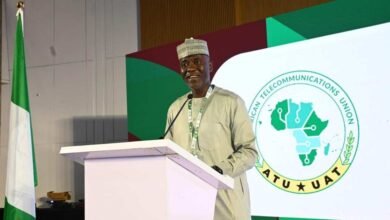
On the African Union scene. At the 39th Ordinary Session of the African Union Assembly in Addis Ababa in February 2026, Vice President Shettima led Nigeria’s delegation to what proved to be one of the country’s more consequential AU engagements in recent memory.
The headline outcome was a permanent seat on the Board of the African Central Bank—the institutional body that will govern Africa’s continental financial architecture as the AU’s monetary integration agenda matures. The Council also extended Nigeria’s representation to the Technical Convergence Committee of the African Monetary Institute. Minister Tuggar acknowledged the win was not easily secured — it faced resistance from other member states before Nigeria’s diplomatic engagement prevailed.
The significance of this achievement deserves emphasis. Africa’s economic integration is not yet complete, but the institutions that will govern it are being built now. A permanent Nigerian seat on the board of the African Central Bank means that decades from now, when the continent’s monetary architecture may be fully operational, Nigeria would have helped to design it from the inside. That is long-term strategic positioning of the highest order.
Beyond the financial architecture win, Nigeria committed to hosting the Combined Maritime Task Force for the Gulf of Guinea—providing office facilities, ships, helicopters, and staff—in a move that positions Nigeria at the centre of maritime security governance in the sub-region. On democratic governance, VP Shettima endorsed AU reforms on unconstitutional changes of government while simultaneously endorsing the lifting of suspensions for Gabon and Guinea—a posture that balanced principled commitment to democratic norms with pragmatic recognition that reintegration, not perpetual exclusion, is the path back to stability.
Perhaps the most sensitive and most revealing of Nigeria’s recent diplomatic engagements has been its approach to the Republic of Niger—a country that experienced a military coup in 2023, was subjected to ECOWAS sanctions that Nigeria championed, and yet remains one of Nigeria’s most consequential neighbours.
On April 16, 2025, the former Minister of Foreign Affairs, Amb. Tuggar paid a working visit to Niamey for high-level talks with his Nigerien counterpart—a meeting conducted, by all accounts, in a spirit of fraternity and good neighbourliness. The outcomes were substantive: commitment to revitalising the Nigeria-Niger Joint Commission; advancing the Kano–Katsina–Jibiya–Maradi Railway; the Trans-Saharan Gas Pipeline, Trans-Saharan Highway, and Trans-Saharan Fiber Optic projects; and enhanced counter-terrorism and border security cooperation.
The significance of this is crucial. The border between Nigeria and Niger is 1,500 kilometres of porous, contested terrain through which insurgents, smugglers, and trafficked persons move with regularity. Security along that frontier affects both countries significantly. The Tinubu administration’s decision to pursue diplomatic normalisation with Niger’s military government, without abandoning its democratic principles, reflects the difficult but necessary pragmatism of a country that must live with its neighbours long after the summit declarations have faded.
It is easy to dismiss foreign policy as the business of elites. It is harder to maintain that dismissal when you consider what it actually produces.
The $20.93 billion that Nigerians abroad sent home in 2024—those are school fees paid, businesses funded, families sustained. The GECF Secretary-Generalship won in Doha—that is Nigeria at the table where global gas prices and energy transition policies are shaped, a table with consequences for every Nigerian who pays an energy bill or works in the gas sector. The permanent seat on the African Central Bank Board—that is Nigeria’s hand in writing the financial rules that will govern African trade and investment for the next century. The UAE visa ban being lifted—that is Nigerian families reunited, Nigerian businesspeople back in the air, and Nigerian commerce resumed.
Foreign policy, at its best, is domestic policy conducted on the global stage. And the clearest measure of its success is not the eloquence of the doctrine or the ambition of the framework, it is whether ordinary Nigerians live better, work more freely, and face the future with greater confidence because of it.
Under President Tinubu, the architecture is being built. The doctrine is coherent, the engagements are multiplying, and the institutional wins are accumulating. The challenge ahead—the one that will determine the ultimate verdict on this era of Nigerian foreign policy—is execution at home: the regulatory clarity, institutional stability, and policy consistency that alone can convert diplomatic openings into jobs, infrastructure, and industrial growth.
Nigeria is at the table. And President Tinubu is making sure that being on this table delivers for all of us.
– Mohammed Abiodun is a historian, he writes from the FCT