News
President Trump Threatens Further Military Action After Capture of Venezuelan President
By Dayo Dare

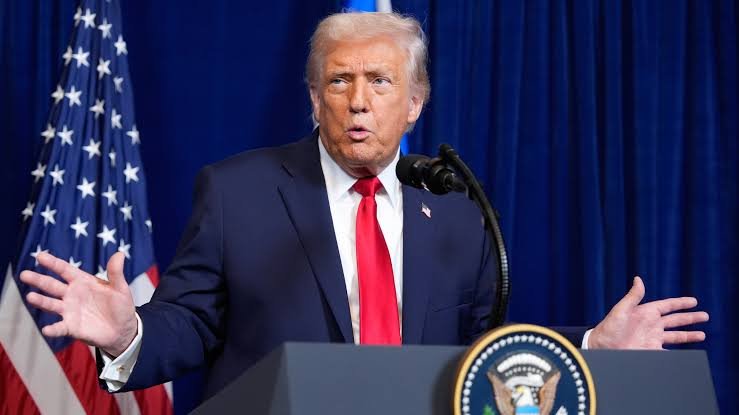
The world was left in shock Saturday after U.S. President Donald Trump announced the capture of Venezuelan President Nicolás Maduro following a U.S.-led military operation.
The attack reportedly took place in the early hours of Saturday morning. Eyewitnesses said aircraft were seen flying over Caracas, where the president was believed to be located, followed by power outages in several areas. An explosion was later reported near the airport. Residents were urged to remain calm as the operation unfolded. However, sources revealed that the strike resulted in at least 40 casualties.
The operation caught many by surprise, not only because Trump publicly acknowledged the strike on another country’s territory, but also because he declared that the United States would oversee Venezuela until a transition of power was completed.
“The United States of America has successfully carried out a large-scale strike against Venezuela and its leader, President Nicolás Maduro, who has been, along with his wife, captured and flown out of the country,” Trump wrote on Truth Social early Saturday.
“We’re going to be running it. No cowardly attack will prevail against the strength of this people, who will emerge victorious,” Trump said.
The announcement sent shockwaves across the international community. Venezuelan Vice President Delcy Rodríguez condemned the operation and demanded the immediate release of Maduro and his wife, Cilia Flores.
U.S. officials justified the action, citing a new indictment filed in U.S. District Court and shared by Attorney General Pam Bondi. The indictment alleges that Maduro ran state-sponsored criminal networks involved in large-scale drug trafficking into the United States.
Trump said the strike was carried out without notifying members of Congress to prevent intelligence leaks, adding that Maduro would be held accountable for his alleged crimes.
Following Maduro’s removal, Rodríguez was appointed interim president and has reportedly offered to cooperate with U.S. authorities. The United States is also expected to play a role in establishing a transitional government in Venezuela.
The move, widely described as unprecedented, did not end there. Trump issued a warning to Colombia, threatening military action if the country failed to act in line with U.S. expectations.
The arrest and intervention have sparked global debate. While supporters argue the move was justified, critics say it represents a dangerous breach of international law and raises serious concerns about unilateral military power.
As tensions rise, questions continue to surface: If the United States can take such drastic action against a sovereign nation, what does this mean for others? Where does the United Nations Security Council stand, and why has there been limited international pushback?