
Aliko Dangote: The Jour’s Person of the Year 202
Fueling a Nation’s Energy Security
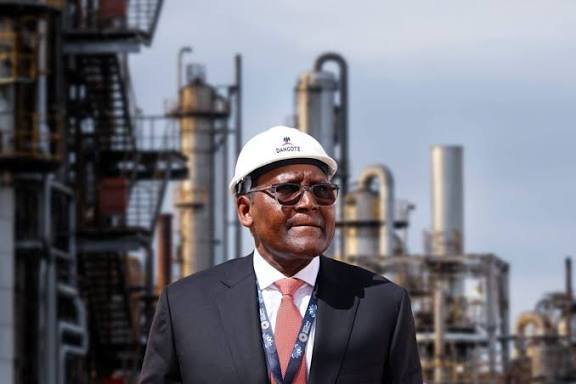
In a year marked by transformative shifts in global economies and local politics, one stands out as a potential game-changer for Nigeria’s economic landscape: the completion and commencement of operations of the Dangote Petroleum Refinery. This monumental project, the brainchild of Africa’s foremost industrialist, Aliko Dangote, marks a pivotal moment in Nigeria’s journey towards energy security, industrialization and economic self-sufficiency.
Dangote’s achievement is monumental—not only because of the scale of the refinery but because of what it represents for Nigeria’s future. The refinery stands as a beacon of hope and a testament to the transformative power of private sector investment in driving national development.
For his vision, unwavering commitment, and the sheer scale of this transformative undertaking, we proudly name Aliko Dangote our Person of the Year 2024!
Nigeria’s relationship with crude oil is a complex tapestry woven with threads of immense potential and persistent paradox. The country’s oil journey began in 1956 when crude oil was discovered in commercial quantity by Shell BP in Oloibiri, Bayelsa State. This discovery, which marked the beginning of Nigeria’s oil boom, was a watershed moment for the country, as crude oil quickly became the lifeblood of its economy. By the 1970s, Nigeria had become one of the world’s top oil producers, reaching an output of over 2 million barrels per day (bpd). Oil became the backbone of the Nigerian economy, accounting for more than 90% of the country’s foreign exchange earnings and over 80% of its budgetary revenues.
However, while Nigeria’s crude oil reserves were abundant, the country found itself at a critical juncture—lacking the necessary infrastructure to refine its oil domestically. This lack of refinery capacity has meant that Nigeria has been a net importer of refined petroleum products despite being one of the largest oil producers in the world.
The first attempt at refining crude oil in Nigeria was made with the establishment of the Port Harcourt Refinery I in 1965 with a capacity of 60,000 bpd. This was followed by 150,000 bpd Port Harcourt Refinery II in 1988, 125,000 bpd Warri Refining and Petrochemical Company (WRPC) in 1978 and 110,00 bdp Kaduna Refining And Petrochemical Company (KRPC) in 1988. At the time of their construction, these refineries were built with an ambitious goal: to ensure that Nigeria would be able to process its crude oil and provide refined products to meet local demand.
However, these state-owned facilities have been plagued by mismanagement, underinvestment, corruption and the devaluation of the local currency, consistently operating far below their installed capacities. By the early 2000s, Nigeria found itself facing a dire situation. The country was still producing oil in large quantities, but it was not refining enough to meet local needs. As a result, Nigeria became heavily reliant on imports of refined petroleum products, a situation that not only strained the country’s foreign exchange reserves but also subjected the population to the volatility of international fuel prices.
This dependence on imports also gave rise to the controversial fuel subsidy regime. Intended to cushion the impact of high international oil prices on citizens. The subsidy became a cesspool of corruption. And billions of dollars were lost to fraudulent practices, smuggling, middlemen, and inefficiencies. More than benefiting the masses, the scheme enriched a select few and placed an immense burden on the national budget, hindering investment into critical sectors like education, healthcare, and infrastructure.
According to the Nigeria Extractive Industries Transparency Initiative (NEITI), Nigeria spent $74.3862 billion, or 13.697 trillion Naira, on fuel subsidies between 2005 and 2021.
The Dangote Refinery: A Vision of Self-Sufficiency
Amidst this backdrop of dependency and inefficiency, Aliko Dangote, Africa’s richest man and an industrial magnate known for his tenacity and visionary approach, embarked on an ambitious project that could reshape Nigeria’s economic landscape—the Dangote Refinery. With an estimated cost of $19 billion and a refining capacity of 650,000 barrels per day (bpd), the Dangote Refinery is the largest single-train refinery in the world. This is an embodiment of Nigeria’s potential to harness its vast natural resources for its own economic development.
The Dangote Refinery promises to bring in significant benefits for the Nigerian economy. By processing crude oil locally, Nigeria will save billions of dollars in foreign exchange that would otherwise be spent on importing refined products. But it would take time—it is not an immediate shot at victory. The country has already spent about N12 trillion importing PMS products in 2023. More, the refinery’s capacity to export refined products to neighboring countries could transform Nigeria into a regional refining hub, boosting its geopolitical influence and trade relations with other African nations.
The Benefits of Local Refining and Subsidy Removal
The most immediate benefit of the Dangote Refinery will be Nigeria’s ability to wean itself off the costly and politically sensitive fuel subsidy regime. For decades, the Nigerian government has struggled to manage fuel subsidies, which have eaten into the country’s budget and exacerbated fiscal deficits. The removal of the fuel subsidy by President Bola Ahmed Tinubu’s administration has been a contentious issue, with many Nigerians feeling the consequences of higher cost of living. However, with Dangote’s refinery coming on stream, the very justification for the subsidy has been eroded.
The substantial funds previously allocated to the subsidy, estimated to have reached 11.7 trillion naira ($26 billion) from 2016 to 2023, must now be reallocated to crucial investments in infrastructure, education, healthcare, and social safety nets, directly benefiting the Nigerian populace.
Energy Security
One of the most significant benefits of Dangote’s refinery is its contribution to Nigeria’s energy security. With the refinery now operational, Nigeria has taken a critical step toward controlling its energy future. The refinery will reduce the country’s reliance on imported fuel, which has been subject to external geopolitical and economic shocks. By processing its own crude oil, Nigeria can ensure a steady, reliable supply of fuel for its growing population and industrial sector.
Moreover, the successful operation of the Dangote Refinery will increase Nigeria’s capacity for strategic petroleum reserves, allowing the country to better manage its fuel supply in times of crisis. The refinery’s scale and capacity also give Nigeria the potential to expand its energy exports, including refined products and petrochemicals, creating a more diversified and sustainable energy export sector.
West Africa Refinery Hub
The refinery’s influence will extend to the wider region, with Nigeria becoming a key player in the West African energy market. As the largest refinery in Africa, it has the potential to become a hub for supplying refined products to neighboring countries, creating new export opportunities for Nigeria. This could further bolster Nigeria’s foreign exchange earnings and establish it as a regional leader in energy production.
Moreover, the successful operation of Dangote Refinery can serve as a model for other private investors to venture into the oil and gas sector. Dangote’s commitment to building a refinery of such magnitude demonstrates the potential for private capital to contribute to Nigeria’s industrialization and economic independence. It also sends a powerful message about the importance of self-reliance in a world that is increasingly focused on securing sustainable energy resources.
Dangote’s Legacy as “The Man of the Year”
In many ways, Aliko Dangote’s determination to see the Dangote Refinery through to completion is beyond a personal triumph but one for Nigeria. By investing in domestic refining capacity, Aliko Dangote is providing a solution to one of the most persistent problems facing our country. As Nigeria looks to remove the fuel subsidy, reduce its dependence on imported products, and create a more resilient economy, Dangote’s refinery stands as a beacon of hope and an example of what is possible with vision, persistence, and a commitment to national progress.
For his unparalleled contribution to Nigeria’s economic future, for his role in making local refining a reality, for putting his substance on the line and betting on Nigeria, Aliko Dangote is undoubtedly The Jour’s Person of the Year 2024. His legacy will be felt for generations to come as Nigeria continues on its path to economic diversification, energy security, and industrialization.
THE JOUR’S EDITORIAL BOARD
JANUARY 2025