Politics
The Monguno Paradox: Forty Questions afor Buhari’s Former National Security Adviser
By Dr. Mohammed Kachallah Gulmari

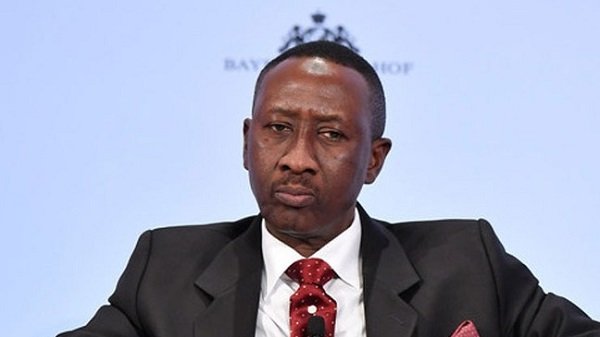
The recent revelations by retired Major General Babagana Monguno, former National Security Adviser (NSA), to President Muhammadu Buhari, in the biography ‘From Soldier to Statesman’, demand rigorous scrutiny.
While Monguno portrays himself as a victim of a predatory “cabal,” his eight-year tenure and the specifics of his account raise profound questions about his own competence, accountability, and motives.
The following forty questions, flowing serially, interrogate the contradictions and omissions in his narrative, challenging the foundation of his professed victimhood and effectiveness.
The 40 Questions:
1. If the cabal was so powerful and your office was starved of funds, why did you remain in the office of NSA for eight full years instead of resigning on principle?
2. Does your lengthy tenure not suggest a level of complicity or acceptance of the dysfunctional system you now condemn?
3. How do you define your own competence as NSA when you admit the country’s security architecture was “effectively blinded” under your watch?
4. Is blaming a “cabal” for eight years a substitute for personal accountability and strategic ingenuity?
5. What tangible, successful security operations can you directly credit to your leadership as NSA, independent of the cabal’s interference?
6. You claim your office was starved of funds, yet the prestigious Counter-Terrorism Centre was built. With which specific funds was this project executed?
7. Can you provide a detailed accounting of the budget for the Counter-Terrorism Centre and the contractors involved?
8. If the Finance Minister withheld your funds, as claimed, what special arrangement or pressure secured funding for this capital project?
9. Did you raise the illegal withholding of approved funds in any Federal Executive Council meeting or through other official, public channels?
10. What precise role did you play in the infamous midnight siege on the National Assembly and the removal of DG SSS, Lawal Daura, in 2018?
11. Were your professional recommendations as NSA solely responsible for their removal, or were there other political forces at play?
12. How did these removals improve the intelligence coordination you lament was sabotaged by the villa?
13. Did you ever oppose the method of their removal, given the constitutional and institutional crises it provoked?
14. Can you explain the source of wealth for your then Director of Finance and Administration (DFA), Brig. Gen. Jafaru Mohammed, who was reported to own lavish mansions in Abuja, Kano, Lagos, and Kaduna?
15. As the NSA, what disciplinary action did you take regarding these allegations about your DFA?
16. Is it true that you own properties in the United Kingdom and the United States? If so, can you declare them and explain the legitimate source of funds for their purchase?
17. Did you ever submit yourself to the Code of Conduct Bureau to verify the legitimacy of your assets, both domestic and foreign?
18. How can you reconcile allegations of a cabal enriching itself with unanswered public questions about the wealth of your own close aide?
19. You describe a single incident about aircraft fuel as revealing the cabal. Does this not reduce grand corruption and security sabotage to a petty contractual dispute?
20. Why did you not formalize your repeated “face-to-face pleas” to President Buhari into written, minuted reports that would create an undeniable paper trail?
21. You sent “30 reminders” that were ignored. At what point does persistence become futility, and why not make a public stand?
22. You claim the Special Services Office was sidelined. Why did it take until Boss Mustapha became SGF to forcefully insist on its inclusion?
23. Operating without a permanent secretary for 20 months is a major administrative failure. Why was your office unable to overcome this “political calculus”?
24. You say Buhari and Nigerians were “victims.” As NSA, are you not a member of that same victimized leadership class that failed the nation?
25. Is publishing these accusations in a biography after leaving office, not the very definition of closing the stable door after the horse has bolted?
26. If the national security infrastructure was crumbling due to lapsed subscriptions, what interim, low-cost intelligence strategies did you develop?
27. You blame petty sabotage repeated often. As NSA, what was your “petty persistence” to counter it, beyond memos that went unanswered?
28. The book reveals you were made “persona non grata” by Mamman Daura. Does this not admit that you were effectively outmanoeuvred and sidelined by non-officials?
29. Why did you never consider a public resignation with a detailed statement to expose the cabal while in office when it could have pressured the system?
30. How do you reconcile your powerful constitutional role with the image of an NSA who needed permission to fund villa surveillance?
31. Is this biography not a carefully timed attempt to salvage your legacy by shifting all blame to a cabal and a deceased president?
32. What is your response to critics who say you were a convenient, quiet NSA for a system you now condemn, and your silence was purchased with your tenure?
33. Did you ever directly tell President Buhari that his Chief of Staff and relatives were undermining national security?
34. You quote Buhari as saying “Leave the file” or “I’ve sent it to Malam Abba.” Why did you accept this circular delegation of authority over critical security funds?
35. What is more damaging: a powerful cabal or a security adviser who documents his own powerlessness for eight years without a decisive action?
36. Can you name the specific members of this “cabal” beyond the late Abba Kyari and Mamman Daura?
37. Did this cabal have any positive influence on any security or government policy, or was it solely a destructive force?
38. How did this cabal manage to control the presidency so completely without, according to you, the president’s conscious consent?
39. Is it not a failure of intelligence that the NSA could not compile a definitive, actionable report on the cabal’s activities for the president?
40. Finally, having watched insecurity worsen from 2015 to 2023, do you believe your tenure as NSA made Nigeria safer, and if not, why should history judge the cabal more harshly than you?
The portrait that emerges from these questions is not of a shrewd security strategist but of a bureaucrat who clung to title for eight years while documenting his own irrelevance. He presents himself as a meticulous note-taker of his powerlessness, a chronicler of his own failure to influence, lead, or resign. His narrative reduces the monumental security failures of an era to petty villa squabbles over fuel contracts and blocked memos, while he remained the dignified, well-dressed face of a security apparatus he admits was “blinded.” He now seeks to shape history by revealing secrets in a book, a final, safe act of defiance that required no courage when it mattered. The ultimate indictment is not just of a cabal he describes, but of a man who watched the house burn for eight years, meticulously recorded who blocked the water, but never once shouted “fire!” loud enough for the public to hear—until everyone had safely left the scene.