
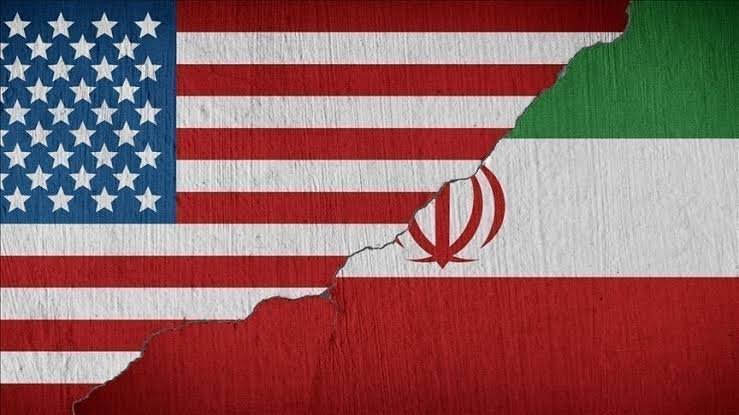
The United States and Iran agreed to a two-week conditional ceasefire Tuesday evening, with Tehran committing to a temporary reopening of the Strait of Hormuz following a last-minute diplomatic intervention led by Pakistan.
The deal effectively halted an ultimatum issued by former President Donald Trump, who had warned Iran to surrender or face large-scale U.S. military strikes.
Trump announced the agreement less than two hours before his self-imposed 8 p.m. Eastern deadline to launch attacks targeting Iranian infrastructure, including power plants and bridges—an action that legal scholars, global officials, and the Vatican had cautioned could amount to war crimes.
Just hours earlier, Trump had posted a stark warning on social media.
“A whole civilization will die tonight, never to be brought back again. I don’t want that to happen, but it probably will,” he wrote.
Reports indicated U.S. B-52 bombers were already en route before the ceasefire was confirmed.
In a follow-up post, Trump described the development as “a big day for world peace,” adding that Iran had “had enough.” He also noted that the U.S. would assist in easing congestion in the Strait of Hormuz as global energy flows resume, saying “big money will be made” during Iran’s reconstruction phase.
“Subject to the Islamic Republic of Iran agreeing to the complete, immediate, and safe opening of the Strait of Hormuz, I agree to suspend the bombing and attack of Iran for a period of two weeks,” Trump said.
“This will be a double-sided ceasefire. The reason for doing so is that we have already met and exceeded all military objectives and are very far along with a definitive agreement concerning long-term peace with Iran and peace in the Middle East.”
Iran’s Foreign Minister Abbas Araghchi confirmed Tehran’s position shortly after the announcement.
“For a period of two weeks, safe passage through the Strait of Hormuz will be possible via coordination with Iran’s Armed Forces,” he said.
Despite the breakthrough, uncertainty initially surrounded Israel’s stance. However, Prime Minister Benjamin Netanyahu later confirmed support for the U.S.-brokered ceasefire, noting that it does not extend to operations against Hezbollah in Lebanon.
The agreement followed the submission of a 10-point proposal by Iran, which Trump described as “a workable basis on which to negotiate,”
Pakistan has since invited both nations to further talks in Islamabad on Friday. Tehran has confirmed its participation, while Washington has yet to formally respond.
“Almost all of the key points of contention between the United States and Iran have been resolved,” Trump said. “A two-week window will allow the agreement to be finalized and concluded.”
Still, tensions remained high. Strikes were reported in parts of Iran before the deadline, including hits on bridges and a train station, while U.S. forces targeted infrastructure on Kharg Island, a key oil hub.
International reaction has been cautiously optimistic. Iraq called for sustained dialogue to address underlying tensions, while Germany emphasized the need for the ceasefire to serve as a foundation for lasting peace.
Other countries, including Japan, South Korea, Australia, and New Zealand, welcomed the development but warned that significant work remains to secure long-term stability in the region.