Security
As Security Agencies Tighten Coordination, Nigerian Forces Press Advantage Against Terrorist Networks

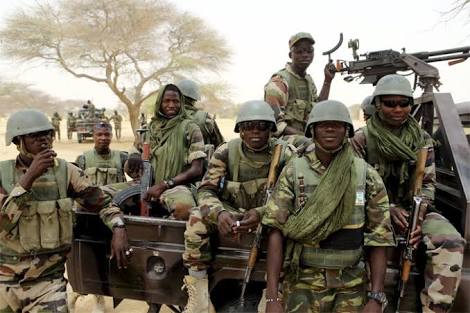
In the span of just a few days, Nigerian security forces carried out a series of coordinated operations across the country’s North-West, North-East and North-Central regions, rescuing kidnapped civilians, killing suspected terrorists and disrupting planned attack—a pattern that security analysts say increasingly reflects a more synchronized approach to counterterrorism operations than in previous years.
The operations, conducted by different branches of the military and supported by intelligence and air assets, underscore what officials describe as a growing emphasis on joint planning, intelligence sharing and multi-agency coordination in Nigeria’s long-running battle against terrorism, banditry and kidnapping.
In northwestern Zamfara State, troops of Operation FANSAN YAMMA, backed by precision air strikes, stormed terrorist hideouts around the Bagega-Kawaye corridor in Anka Local Government Area, rescuing 31 kidnap victims who had reportedly spent weeks in captivity. The victims, drawn from communities in Zamfara, Sokoto and Kebbi states, were evacuated for medical attention before being prepared for reunification with their families.
The operation formed part of a broader offensive that extended into neighbouring Katsina State, where troops intercepted armed terrorists allegedly mobilizing for an attack along the Ruwan Godiya-Sayaya axis in Matazu Local Government Area. Security forces killed three terrorists during the encounter and recovered weapons, ammunition and motorcycles.
Elsewhere in Zamfara, troops engaged another group of insurgents around Maradun and Gidan Dan Jaja, killing two fighters, destroying terrorist camps and seizing locally fabricated rifles and motorcycles used in criminal operations.
The developments come as Nigerian military commanders increasingly rely on intelligence-driven operations that integrate air surveillance, precision strikes and coordinated ground assaults.
That strategy was also on display in Borno State, where the Nigerian Air Force said it had sustained an aggressive air campaign against terrorist strongholds inside the Sambisa Forest axis.
Acting on intelligence gathered through surveillance and reconnaissance platforms, air assets attached to Operation HADIN KAI launched precision strikes on May 26 against identified terrorist facilities in Biramiri within the Gezuwa area. The strikes destroyed logistics hubs and support structures while neutralizing multiple fighters, according to military officials.
The Air Force said subsequent intelligence assessments pointed to growing confusion and anxiety among terrorist elements operating in the Sambisa region.
For years, insurgent groups in northeastern Nigeria relied on remote forest enclaves and hidden logistics networks to sustain their campaigns. Military officials note that persistent aerial surveillance and repeated strikes have significantly reduced those advantages, limiting the ability of fighters to regroup or move freely.
A similar model of coordination was evident in Niger State, where the Air Component of Operation FANSAN YAMMA Sector 1 worked alongside the Nigerian Army Space Command Regiment to strike terrorist concentrations in Rafi and Mariga local government areas.
Following intelligence reports on terrorist movements around Tungan Bako and Kasuwan Daji, air assets carried out precision interdiction strikes that eliminated several fighters and disrupted what officials described as an operational buildup.
Additional strikes targeted terrorists moving with rustled cattle between Tungunguna and Uregi, while separate operations in Dogon Dawa and surrounding communities in Mariga Local Government Area disrupted what authorities said were planned attacks.
Military officials said the operations prevented the groups from consolidating their positions and degraded their ability to launch coordinated assaults on nearby communities.
The succession of operations across multiple theatres highlights a notable evolution in Nigeria’s security architecture. While military campaigns against insurgents and bandits have been ongoing for years, officials and independent observers point to stronger integration among intelligence agencies, the armed forces and specialized operational commands as a key factor behind recent successes.
At the center of that effort is a security coordination framework that places greater emphasis on intelligence fusion, joint operational planning and synchronized execution among agencies that historically operated in silos.
The approach, overseen through the Office of the National Security Adviser, has increasingly sought to align the activities of the military, intelligence services and other security institutions, enabling faster responses to emerging threats and more effective targeting of terrorist networks.
Security experts note that while challenges remain the recent operations demonstrate the benefits of sustained inter-agency collaboration.
For communities across northern Nigeria, where kidnapping and terrorist violence have inflicted years of hardship, the immediate impact is measured in lives saved and families reunited.
The rescue of 31 kidnap victims from terrorist captivity in Zamfara is one such example. Yet security officials argue that the broader significance lies in the operational model itself: intelligence gathered from one source, analyzed through a centralized framework, translated into coordinated action by air and ground forces, and executed across multiple states.
As Nigerian forces continue to pressure terrorist networks simultaneously in the North-West, North-East and North-Central regions, military authorities hope the cumulative effect will further constrain the ability of armed groups to regroup, recruit and launch attacks.