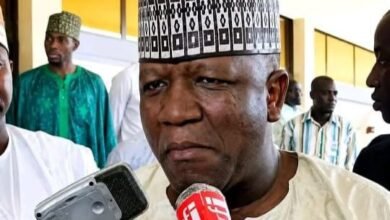

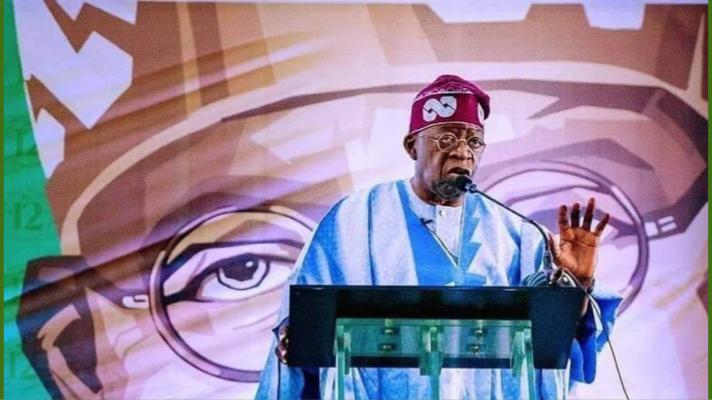
It has been nearly two decades since the Constitution brought Bola Tinubu and Donald Duke’s governorship tenures to an end.
Since then, Duke has become politically irrelevant, while Tinubu has gone on to build one of Africa’s most formidable political parties and eventually become President.
The difference in their political fortunes does not mean that Duke was a bad governor. By most accounts, the lawyer was a superb leader who turned Cross River State, especially Calabar, the state capital, into one of Nigeria’s cleanest and most orderly cities.
He also developed the Obudu Mountain Resort into a major international tourist destination and remains one of the few political figures in the country never linked to any corruption investigations by the Economic and Financial Crimes Commission, EFCC.
On the other hand, Tinubu’s political relevance can be traced in large part to the foundation he laid during his tenure as Lagos governor. His administration pursued financial reform, infrastructural growth and modernised the public service.
Those long-term reforms, and his ability to sustain a formidable political network after leaving office, ensured that Tinubu’s influence extended far beyond his time as governor.
Today, Tinubu is attempting to apply a similar long-term approach to governing Nigeria, pursuing economic reforms and major infrastructure projects that he believes will reshape the country over time.
That approach has drawn criticism from Duke, who is trying to use the President to reawaken his slumbering political career. A few days ago, the ex-Cross River State governor, who is the presidential candidate of the Peoples Redemption Party, Donald Duke, warned that Nigeria is heading towards a dangerous path that requires urgent intervention.
He said the country could face disaster within the next four years if its current trajectory is not reversed.
Hear him speak: “The direction the country is going, I think, requires urgent, very urgent intervention. Another four years, if we don’t change the trajectory, I see disaster already looming. It will deepen further. The economy is broken, it’s not growing. We have not grown the economy. Governance is poor. In the last close to 20 years, there’s been very little governance going on, more politics than governance. The focal point of governance is to ensure that the citizens are optimally productive within a safe and orderly environment. Our citizens are not productive. The environment is not safe. There’s no order. So, it’s chaos.”
Nevertheless, Donald Duke is echoing market voices. He is detached from reality as are his friends Peter Obi, Alhaji Atiku Abubakar and Adewale Adebayo and Omoyele Sowore, who live in a completely different world.
About a year ago, the first woman and first African Director-General of the World Trade Organisation, Dr Ngozi Okonjo-Iweala, offered a different assessment of the administration’s economic reforms.
The objective Okonjo-Iweala proceeded to laud the Tinubu administration for stabilising the country’s economy.
She emphatically said: “The President and his team have worked hard to stabilise the economy. You cannot really improve an economy unless it is stable. He has to be given the credit for the stability of the economy. The reform has been in the right direction. What is needed next is growth. We now need to grow the economy and put in a social safety net so that people who are feeling the pinch of the reforms can also have some support to be able to weather the hardship.”
From her statement, one can categorically see that Tinubu is working on a productive and growth economy. More so, we can not afford to go back to Egypt and be ruled by individuals like Duke, who are only focused on the short term.
Beyond retooling the economy, the Tinubu administration is not just talking, it is delivering. In the last three years no less than 440 road projects have been approved nationwide. There have been 260 completed palliative interventions. Suleja–Minna dual carriageway. Reconstruction of Abuja–Lokoja Road. Upgrading of Ibadan–Ife–Ilesa Road. New Carter Bridge in Lagos.
For state governments, they now have more money. Thanks to improved revenue generation under these reforms, FAAC allocations have hit record highs.
In June 2026 alone, a total of N2.55 trillion was shared among the three tiers of government. While state governments received N838.2 billion, local governments got N591.4 billion. That means more salaries, more projects, and more development at the state and local levels.Great leaders are rarely remembered for quick fixes. They are remembered for lasting impact, bold decisions and structural changes that continue to shape society long after they leave office.
When we talk about Chief Obafemi Awolowo today, for instance, we remember his achievements in the defunct Western Region and his contributions to national development.
When we speak about Lagos State today, Tinubu’s name features because of the foundations his administration laid for the state’s transformation, particularly in internally generated revenue.
His administration strengthened the Lagos State Internal Revenue Service, LIRS, and pursued reforms aimed at reducing the state’s dependence on federal allocations. It also introduced more streamlined and technology-driven tax collection systems to improve efficiency and reduce leakages.
When we talk about the Jagaban and his tenure as governor, we also remember the creation of Local Council Development Areas, LCDAs, as part of efforts to bring governance closer to the grassroots. We remember his ability to build a formidable political network and mentor a generation of political leaders who later occupied prominent national and state offices.
That is the model Tinubu is replicating at the national level. Therefore, Donald Duke can use his curly hair and presentable television persona to encourage Nigerians to endure the difficult early stages of the reforms, as the benefits will become more apparent with time.
Oyatomi Esq., Former Editor, (Sunday Vanguard 1999-2010), Author (FINGERPRINTS: Nigeria’s Tangled Transition to Nationhood 2008) and a current member of the Board of Independent Media and Policy Initiative (IMPI), a Think Tank based in Abuja.