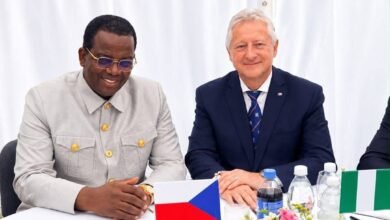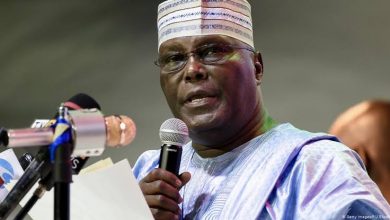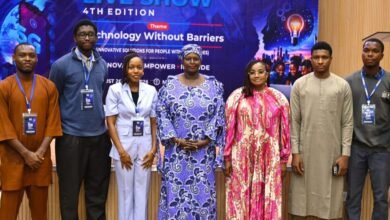

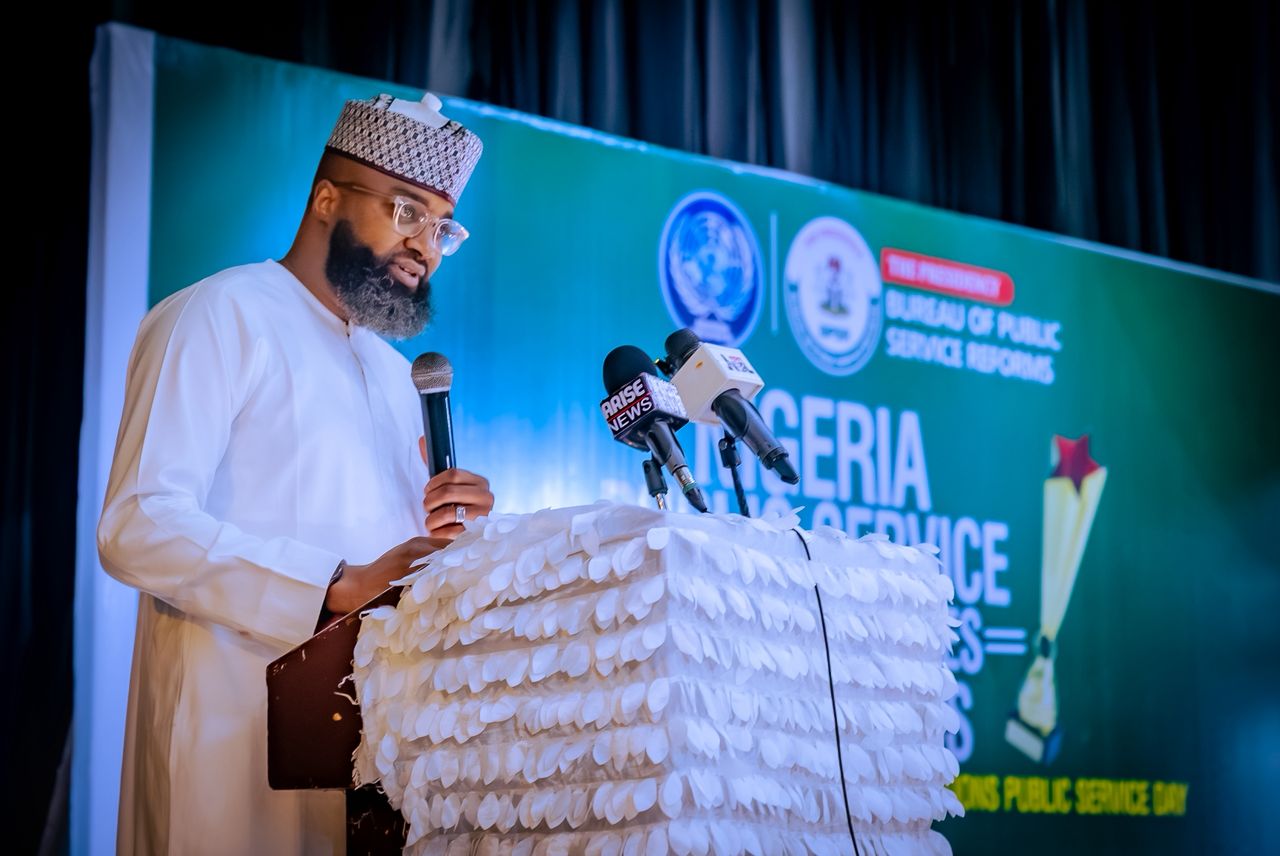
Khalil Halilu is the Executive Vice Chairman and CEO of the National Agency for Science Engineering Infrastructure (NASENI). Last week he appeared on the Nativeland Podcast where he spoke on all that NASENI has done since he got into office and how he is transforming the agency from simply a research agency to an enabler for Nigeria’s industrialization. I took time to watch the insightful interview. Here are some of the key quotes he said, and why they tell the story of a man on a mission–and why he deserves our support as he drives that vision.
1. “Industrialisation is basically sustainability.”
In this part of the interview Khalil strips a big economic word down to what people actually care about: jobs, locally produced goods and a country that can increasingly provide for itself. What Khalil means here is that Industrialisation is not about having factories for the sake of factories. It is about building an economy that creates value and can sustain prosperity.
2. “When you create value, you create jobs, reduce import dependency and earn foreign exchange.”
This is essentially the industrialisation argument in one sentence. Nigeria does not only need to consume or export raw materials. The bigger opportunity is in creating more value locally—because every additional stage of production can mean jobs, businesses and more money retained within the economy. For Khalil, the more value Nigeria creates at home, the more value stays at home.
3. “Before now, NASENI produced almost nothing. Now we can boast of close to 20 factories around the country.”
Khalil sums up his achievements here for me. NASENI has been transformed under his leadership. He has, from time made the argument is that NASENI should not simply be an agency that talks about science and technology. It should have tangible outputs—factories, products, partnerships and businesses that Nigerians can actually see. Evidently, NASENI under Khalil has shifted from talking about industrialisation to actually building things.
4. “On our partnership portal, we have close to 2,000 companies and organisations keen on working with NASENI.”
Industrialisation is too expensive and complex for government to do alone. Nearly 2,000 expressions of interest shows something important in NASENI’s journey. It means that private businesses increasingly see NASENI as a potential platform through which ideas can become commercially viable projects. For Khalil, Government does not have to build everything. Sometimes its most powerful role is getting everyone else to build.
5. “For young kids between five and 16, we have Future Makers… You need to embed the idea and the love of technology in them.”
Khalil’s argument in his interview is that Nigeria cannot suddenly produce world-class engineers, inventors and manufacturers at 25. Curiosity starts much earlier. The NASENI Future Makers programme treats industrialisation as a pipeline—one that begins with getting children interested in science, engineering and making things.
6. “We don’t want to teach everybody how to do certain things, but essentially create that pathway so that their creativity can thrive.”
This is Khalil’s most refreshing thought in the interview. Why do I say so? It means he is not thinking like conventional government appointees think about a government intervention. The goal should not always be for government to dictate the solution. Sometimes the better job is to provide infrastructure, funding, skills and opportunities—and allow talented people to do what they do best.
7. “It is one thing to build a single car… It is another thing to replicate it into hundreds and mass-produce it.”
In this part of the interview, Khalil shows us that he understands what Nigeria’s industrialisation problem is. Nigeria has never been short of impressive prototypes. The difficult part is turning invention into industry. Can it be manufactured repeatedly? Can customers buy it? Can the business survive? That gap between “I built this” and “we manufacture this” is where much of Nigeria’s innovation challenge lies.
He is more or less saying: “A prototype proves an idea. Scale builds an industry.”
8. “You can’t just be an engineer or a scientist. If you want to scale your product, you need some entrepreneurial skills.”
This would not be the first time that the EVC/ CEO NASENI is making an argument that engineering can build the product but it takes entrepreneurship to build the company. It has become evident that one of the reasons President Tinubu put Khalil on that sit was to bring his entrepreneurial ideas to transform NASENI. Never forget that a brilliant product can still become a failed business. Accounting, marketing, cash flow, distribution and customer acquisition may not sound as exciting as engineering, but they are what turn inventions into companies. This is why NASENI’s innovation hubs are intended to provide innovators with the commercial skills surrounding the technology.
9. “We have nothing less than 2,500 drones on ground, all assembled.”
NASENI has truly taken the conversation from theory to hardware. Drones have applications across agriculture, mapping, infrastructure inspection, security and other sectors. More interestingly, Khalil says some of the women trained through NASENI’s programmes are those participating in their assembly.
10. “Assembly is actually production.”
This might be one of my favourite quotes from Khalil’s interview. And ultimately it seats at the core of his entire argument. There is a tendency to dismiss assembly as somehow inferior to “real manufacturing”. Khalil’s counterpoint is that modern manufacturing is a global value chain. Very few countries make every component of sophisticated products themselves. What matters is identifying where Nigeria can compete today—and steadily capturing more value over time. For Khalil, Made in Nigeria does not have to mean every single component was made in Nigeria.
11. “Every country has a competitive edge. You need to find your competitive edge and play it out.”
Germany, Japan and Switzerland excel at sophisticated machinery; America captures enormous value through intellectual property and design; Asian economies have built formidable manufacturing ecosystems. Khalil’s point in his interview is that Nigeria needs to stop trying to play every position and determine where it has an advantage.
And his football analogy makes the point perfectly: you cannot be the goalkeeper, defender, midfielder and striker at the same time. Industrial strategy begins with knowing what position you play.
12. “Why we’re pushing for assembly is the fact that we have competitive labour cost.”
Here, Khalil makes an economic case for Nigeria’s place in global manufacturing. Nigeria has a large, young workforce and comparatively competitive labour costs. Rather than viewing that merely as cheap labour, the challenge is to combine it with skills, infrastructure and technology to make Nigeria an attractive production base.
The bigger prize is eventually exporting what is assembled and manufactured here, and Khalil’s argument rests on the fact that Nigeria’s population is an economic advantage when its people are productive.
13. “If you are partnering with people, you need to also help them get market. Otherwise, all the fancy innovation doesn’t make sense.”
This is perhaps one of the most practical things Khalil says in the entire interview. Innovation dies without customers. Government already spends money buying laptops, medical equipment, agricultural machinery, fertiliser, drones and other products. Strategic procurement can therefore become industrial policy: helping credible Nigerian manufacturers achieve the scale they need to compete.
14. “For every naira that NASENI puts into a partnership, it gets two extra.”
Khalil in this text makes a compelling explanation about NASENI’s counterpart-funding model. He says NASENI generally contributes no more than 30% to partnerships, meaning private partners provide most of the capital—and therefore carry most of the financial risk. In some partnerships, he says NASENI’s stake is as low as 8%. That means public money is being used as leverage, rather than government carrying the entire investment. Keep this in mind: The smartest public money is sometimes the money that attracts even more private money.
15. “The system that has been put in place—that is what I am most happy and most proud of.”
Perhaps the most revealing answer in the interview. Khalil could point to factories, drones, solar products, innovation programmes or partnerships as his biggest achievement. Instead, he chooses systems.
Projects can disappear when leaders leave. Institutions endure when the processes for funding, partnerships, innovation and execution become part of how the organisation works. If those systems survive his tenure, they may ultimately matter more than any single factory.
The real test of leadership isn’t only what you build. It’s whether the system keeps building after you leave.
* Sandra Pam Gyang is a technology enthusiast and writes from Abuja.