

UseOnly recently, in May 2026, 39 schoolchildren and six teachers were abducted in Oyo State. They spent 56 days in the kidnappers’ den. In June 2026, gunmen reportedly abducted seven students of the Federal Polytechnic, Kaura Namoda, Zamfara State. In the same month, following the Namoda abduction, Reuters reported that at least 36 students and one staff member were abducted from a secondary school in Lassa, Borno State.
One question has continued to bother many Nigerians following these incidents: Why can’t the government track these criminals and apprehend them?
They use mobile phones to negotiate with the families of their victims; and our laws already empower security agencies, following lawful authorisation, to obtain call records and other telecommunications data to support investigations.
A report by TechCabal—a leading technology publication—recounts the ordeal of a farm manager, Mr Gbolahan Olaniyi, in Oke Ako village, Ikole Local Government Area of Ekiti State, who was abducted from his farm and held by kidnappers. At the centre of the story lies a troubling question: how could the kidnappers who held him rely so heavily on mobile phones to communicate yet remain beyond the reach of law enforcement?
“They beat hostages while forcing them to speak on video calls,” the victims told TechCabal. “They constantly requested airtime and mobile data to keep their phones active.”
Communication has become an indispensable tool for virtually every enterprise—including criminal ones. Kidnappers need to contact victims’ families, request supplies and maintain communication with their own associates and relatives. Some bandits operating in parts of northern Nigeria have even taken advantage of digital entertainment, maintaining active TikTok accounts.
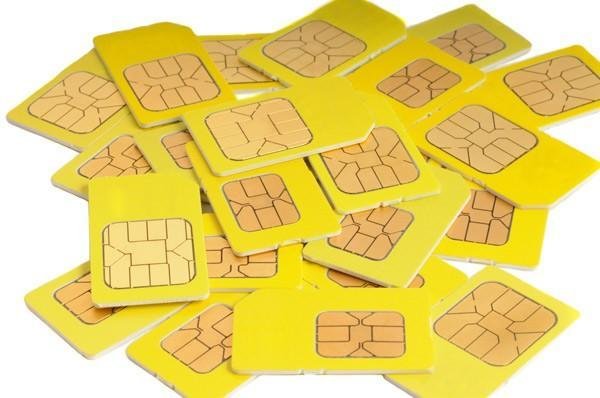
One of the key reasons the Nigerian government introduced the policy requiring every SIM card to be linked to a verifiable National Identification Number (NIN) was national security. Before then, criminals exploited a major loophole. They could acquire anonymous SIM cards, make calls, send threats, negotiate ransoms and remain largely untraceable.
By September 2024, the Nigerian Communications Commission announced the successful completion of the Federal Government’s NIN-SIM linkage programme, which began in December 2020. In effect, every active SIM card operating in Nigeria became linked to a verifiable identity. No one can use the country’s telecommunications networks without being tied to a recognised identity.
The NIN-SIM policy thus strengthened the connection between an active line and a verified identity. It gave security agencies a far stronger ability to identify individuals behind ransom calls—or those connected to them.
But then, the criminals adapted—as SIM registration does not eliminate the problem. According to the TechCabal report—and indeed many accounts from kidnap victims—they have become far more careful about using SIM cards that can be traced back to them. Instead, they often use the phones of their victims or SIM cards registered in the names of unsuspecting third parties.
Nigeria’s security agencies increasingly appear to be confronting the proverbial “Eneke the bird” in Chinua Achebe’s Things Fall Apart—the bird that “has learnt to fly without perching because men have learnt to shoot without missing.”
If the bird has changed its behaviour, then the hunters must rethink their strategy. That may require adding another layer of security—one that goes beyond identifying the subscriber and extends to identifying the device itself.
Many countries today complement SIM registration arrangements with device-level registries although the precise design, powers and safeguards differ from country to country.
Nigeria can draw lessons from device-level identification by improving visibility over the devices that criminals use. While SIM cards can easily be discarded or swapped, the device itself has a persistent identifier that can provide another layer of information. Every cellular device is assigned an International Mobile Equipment Identity, or IMEI, typically a 15-digit identifier associated with the handset.
Of course there are limitations. Device identification is not the same as identifying a criminal. A handset may be stolen, shared or even cloned. What a device identifier provides to law-enforcement could be an additional investigative lead.
Nigeria’s effort to confront crime has been long and constantly evolving. At every stage, law enforcement has had to adapt its tools and methods, even as criminals have adapted theirs. The next step should be to expand the intelligence available to investigators. Device-level intelligence can become an important addition to Nigeria’s investigative toolkit—one that can help law enforcement better trace stolen devices, connect criminal activity to the tools used to perpetrate it, and strengthen the country’s capacity to investigate and prevent crime.
Olusegun Ogedengbe is a researcher, and he writes from Abuja, spenoser@gmail.com