Politics
From Consumption to Production: How Peter Obi’s 2027 Promises Echo His 2023 Campaign
By Dayo Dare

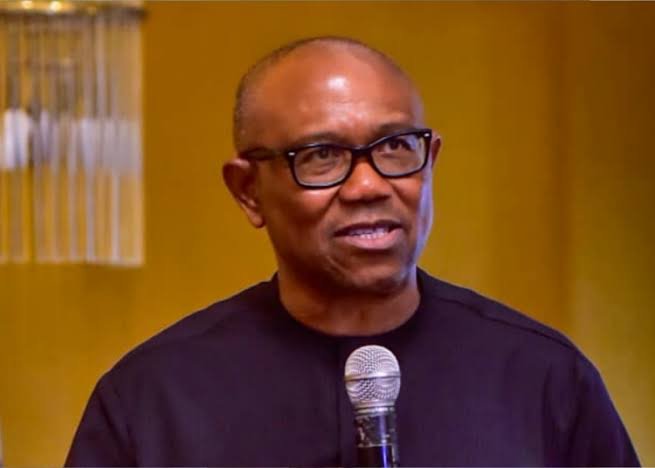
Peter Obi has returned to the presidential campaign trail with a familiar message: Nigeria must move from consumption to production.
The Nigeria Democratic Congress, NDC, presidential candidate made the argument at the launch of his 2027 campaign in Onitsha, Anambra State, on Aug. 21, 2026, where he outlined an economic programme focused on production, investment, enterprise and human capital development.
“We will produce more of what we consume, process more of what we produce, and compete more effectively in global markets,” Obi said.
The message closely echoes one of the central promises of his 2023 presidential campaign.
As the Labour Party candidate in 2023, Obi and his running mate, Yusuf Datti Baba-Ahmed, made moving Nigeria from consumption to production one of the key commitments in their manifesto.
The manifesto identified seven broad areas, including: security, production, institutional reforms, industrialisation, infrastructure, human capital development and foreign policy. Four years later, production remains at the centre of Obi’s economic pitch.
The consumption-to-production promise
In 2023, Obi argued that Nigeria could not achieve economic stability by depending heavily on imports and consuming more than it produced.
In November 2022, while explaining his economic plan ahead of the election, he said his administration would focus first on agriculture and production-led growth for food security and exports.
Obi also linked the production agenda to industrialisation, arguing that Nigeria should process more of its raw materials locally and export finished products rather than commodities.
His 2023 manifesto later formalised that position, promising to “move Nigeria from consumption to production.”
The same argument has now returned in his 2027 campaign.
At the Onitsha campaign launch, Obi said Nigeria must produce more of what it consumes, process what it produces and compete in global markets.
Agriculture remains central to the production agenda
Agriculture is another area where Obi’s current promises closely resemble his 2023 campaign.
During the 2023 campaign, he linked food security to the ability of Nigerian farmers to safely access their farms.
At a rally in Lafia, Nasarawa State, he promised to tackle insecurity so farmers could return to their farms and said his administration would begin the process of making Nigeria self-sufficient in food production.
“If we come into government, I assure you, farmers will go back to farms because we are going to deal with insecurity, we will support youths,” Obi said.
He also argued that Nigeria had enough resources to feed itself if the right policies were implemented.
That position is still present in his current campaign. In 2026, Obi proposed improving security around farmlands while investing in irrigation, rural roads, storage facilities, financing and market access.
In a recent interview, he said agriculture would be the starting point for his plan to move Nigeria from consumption to production, alongside manufacturing and support for small businesses.
Security and agriculture remain connected
Security was another major part of Obi’s 2023 manifesto.
The document promised to secure Nigeria, end banditry and insurgency and ensure that no part of the country was left behind.
At the Lafia rally, Obi connected insecurity directly to agriculture and employment, arguing that farmers could not contribute fully to the economy if they could not safely reach their farms.
His current campaign makes a similar connection.
Obi has said insecurity affects the ability of Nigerians to farm, trade, travel and invest. His 2027 proposals include better intelligence gathering, coordination among security agencies, policing, border management and greater use of technology.
He has also framed security as an economic issue because insecurity can prevent farmers from producing, businesses from moving goods and investors from operating.
At the start of his 2027 campaign, Obi similarly asked whether farmers could work safely and get their produce to market.
Human capital remains part of the economic plan
Obi’s emphasis on human capital development also carries over from 2023.
The 2023 manifesto promised investments in STEM education, healthcare and infrastructure, while also seeking to improve access to finance for MSMEs, youths and women. The document linked these investments to wealth creation, employment and sustainable development.
His 2027 campaign again places education and healthcare alongside economic development.
Obi has promised to strengthen basic education, universities and technical and vocational training. His campaign argues that a production-led economy will require a workforce with the skills to work in industries, technology, manufacturing and other productive sectors.
Healthcare also remains part of the proposal, with his current campaign highlighting access to healthcare, maternal and child health, essential medicines and support for healthcare workers.
From youth empowerment to productive human capital
Young Nigerians also feature prominently in both campaigns.
In 2023, Obi promised to support youths and argued that pulling more young people out of poverty would help reduce criminality.
His manifesto also promised improved access to finance for young people and women and emphasised entrepreneurship, education and skills development.
The 2027 campaign uses a similar framework but places greater emphasis on turning Nigeria’s young population into productive human capital.
Obi has said Nigeria’s large youth population should be treated as an economic opportunity if the country provides the education, skills and employment opportunities needed to harness it.
His proposed sectors for job creation include agriculture, manufacturing, technology, construction, energy, creative industries and services.
Government spending and accountability
One area that receives stronger emphasis in Obi’s current campaign is government expenditure.
His 2023 manifesto already called for institutional reforms, a reduction in the cost of governance and a government that would be more inclusive, cost-effective and less transactional. It also promised measures to fight corruption and strengthen the rule of law.
In the 2027 campaign, Obi has made government spending and accountability more explicit.
He has promised that public expenditure under his administration would be tied to defined objectives and measurable results.
The broader argument is that government must not simply raise and spend money but should demonstrate what public funds are achieving.
That adds a stronger public-finance component to a principle that was already present in the 2023 manifesto: reducing waste, improving accountability and directing resources toward productive activity.
Technology and industrialisation
Technology was also part of Obi’s 2023 agenda.
His manifesto proposed moving Nigeria into the Fourth Industrial Revolution through scientific and technological innovation and the development of a digital economy. It also identified infrastructure, industrialisation and entrepreneurship as important parts of the economic plan.
The 2027 campaign continues that emphasis.
Technology now appears alongside agriculture, manufacturing, energy, construction, creative industries and services as sectors that Obi says can drive economic transformation.
The emphasis has therefore moved beyond simply producing more agricultural goods to creating an economy capable of processing resources, developing industries and competing in global markets.
What has changed between 2023 and 2027?
The central economic message has remained remarkably consistent: Nigeria should move from consumption to production.
In 2023, Obi presented that idea as part of a broader seven-point programme that included security, institutional reform, industrialisation, infrastructure, human capital and foreign policy.
In 2026, the same principle remains the foundation of his 2027 campaign.