
President Bola Ahmed Tinubu has said Nigeria’s colonial-era tax system contributed to widespread poverty, arguing that recent reforms will drive economic growth, improve fairness, and boost investor confidence.
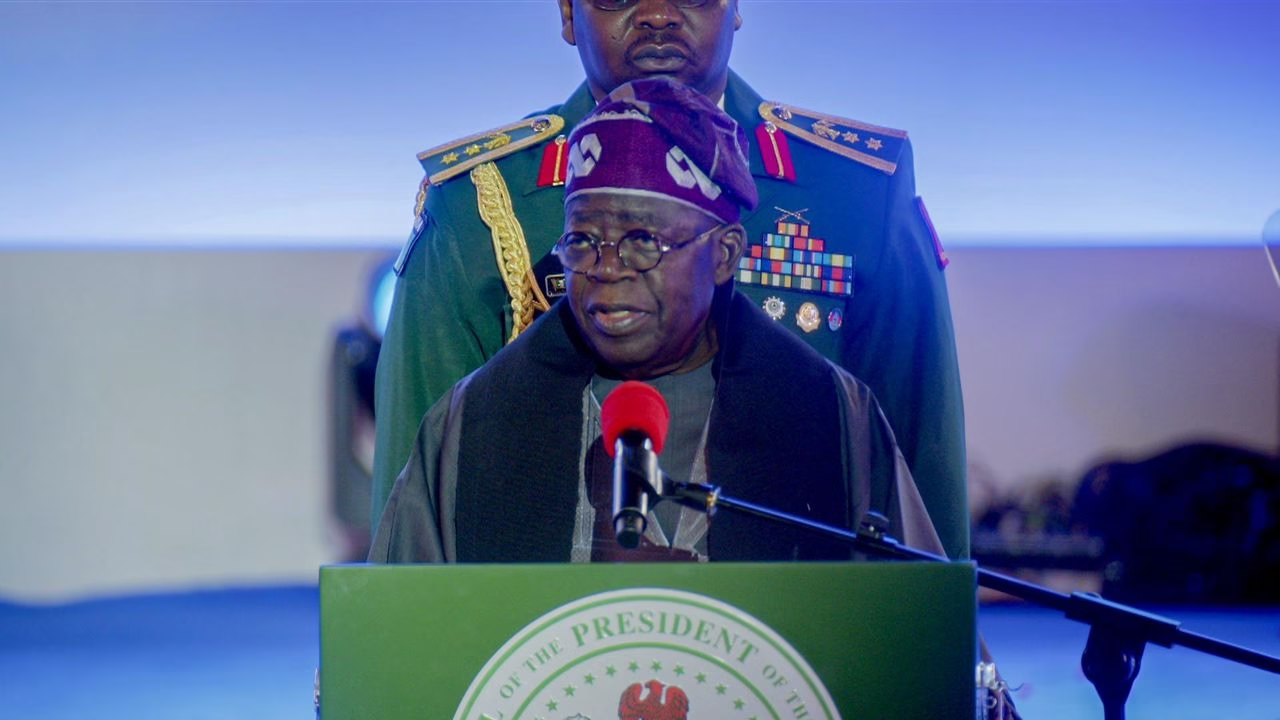
Speaking on Tuesday in Abuja at the commissioning of the new headquarters of the Nigeria Revenue Service, Tinubu said the previous tax framework was fragmented, inconsistent, and inefficient, limiting the country’s economic potential.
He said the newly implemented tax regime, which became fully operational in January, is designed to be simpler, more transparent, and supportive of investment.
“Our direction is clear: to build a revenue system that rewards enterprise, supports growth, and ensures fairness,” the president said.
Tinubu framed the reforms as part of a broader effort to stabilise the economy and restore confidence in public institutions, noting that no country can achieve sustained prosperity with a weak revenue system.
The president also highlighted early signs of improvement, including stronger foreign reserves, improved fiscal stability, and rising investor confidence, which he attributed to deliberate policy changes.
The 16-storey NRS headquarters, completed in 30 months after more than two decades since its foundation was laid, will house about 3,000 staff and includes data processing and training facilities.
Senate President Godswill Akpabio urged Nigerians to remain patient with ongoing reforms, saying they are already producing results, including improved fuel availability and increased domestic production.
Speaker of the House of Representatives Tajudeen Abbas said the reforms have addressed long-standing inefficiencies caused by overlapping tax laws and weak coordination, replacing them with a more coherent system.
In his remarks, NRS Executive Chairman Zacch Adedeji said over 60 fragmented tax laws had been consolidated into a streamlined framework to improve compliance and efficiency. He added that government revenue rose from ₦6.8 trillion five years ago to ₦28.7 trillion in 2025.
Adedeji also pointed to broader fiscal improvements, including increased federation revenue and the rollout of the National Single Window platform to modernise trade processes.
Tinubu said the reforms are not aimed at increasing tax burdens but at creating a more efficient system that expands coverage and strengthens governance.
“The building is more than concrete and steel,” he said. “It symbolises a new standard of transparency, efficiency, and service.”