Security
NSA Ribadu Leads Nigeria Into Second US Security Review as Joint Working Group Reports Progress

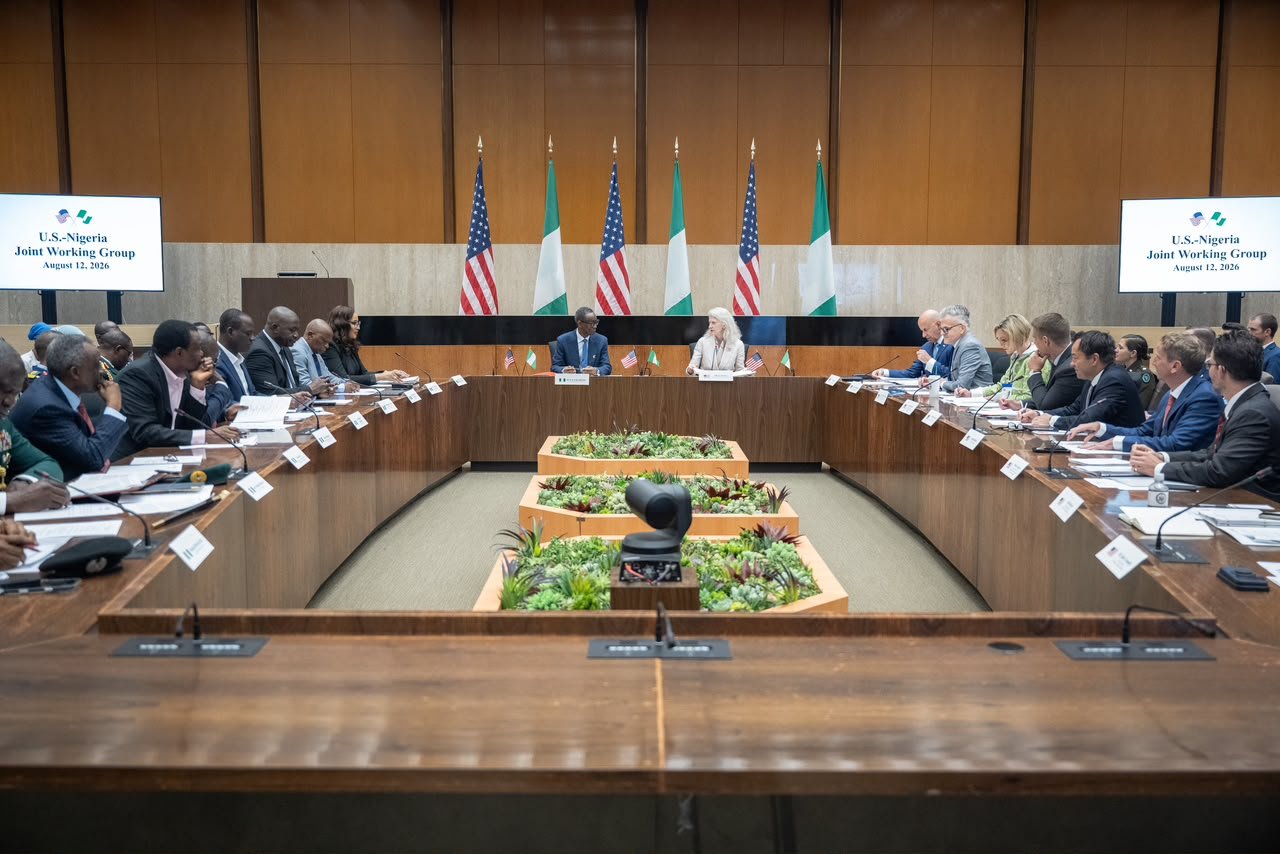
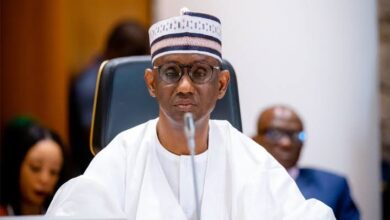
Nigeria and the United States have advanced their security partnership with the second session of the U.S.-Nigeria Joint Working Group (JWG) with National Security Adviser Mallam Nuhu Ribadu leading the Nigerian delegation.
The session, held in Washington on August 12, 2026, was hosted by U.S. Under Secretary of State for Political Affairs Allison Hooker. It builds on the inaugural meeting of the JWG held in Abuja on January 22, 2026, and represents another significant step in the increasingly operational security relationship between the two countries.
The discussions focused on three priority areas: protection of Christian communities in Nigeria’s Middle Belt; strengthening judicial and security institutions to ensure perpetrators of violence are held accountable; and deepening military-to-military cooperation.
The two sides also reviewed progress in the resettlement of internally displaced persons (IDPs) to their ancestral communities, prosecutions arising from counter-terrorism operations and efforts to disrupt the financing of terrorism.
The JWG acknowledged areas of progress while identifying challenges that require continued attention, including reports of civilian fatalities and concerns over transparency in humanitarian expenditure.
The latest meeting further underscores the central role Ribadu has played in building and sustaining the new phase of Nigeria-U.S. security engagement.
The, Mallam Nuhu Ribadu, Nigeria’s National Security Adviser (NSA) led a high-level Nigerian delegation to Washington in November 2025, at a particularly sensitive point in bilateral relations following the U.S. designation of Nigeria as a CPC and heightened American concerns about violence against Christian communities.
During those engagements, Mal. Ribadu and other Nigerian officials met senior figures across the U.S. Congress, State Department, National Security Council, White House Faith Office and the then Department of War. Nigeria rejected characterisations of the country’s security crisis as a religiously targeted genocide, stressing that terrorism, banditry and other forms of violent insecurity affect Nigerians across religious and ethnic lines. The meetings nevertheless produced a commitment by both countries to deepen intelligence and defence cooperation and establish a Joint Working Group.
President Bola Tinubu subsequently approved the Nigerian composition of the JWG, with Ribadu designated to lead the Nigerian side.
The January 2026 inaugural session in Abuja, co-chaired by Ribadu and Hooker, consequently became the first formal mechanism through which both governments could move the contentious CPC issue from public rhetoric into structured engagement.
At the January 2026 inaugural session, co-chaired by Mal. Ribadu and Hooker, Mal. Ribadu described the relationship as having moved beyond dialogue towards practical cooperation, citing enhanced intelligence sharing, closer coordination between U.S. Africa Command and Nigeria’s military, and improved counter-terrorism operations.
The January meeting also established an important principle for the relationship: cooperation would be pursued with respect for Nigeria’s sovereignty while maintaining emphasis on civilian protection, accountability and counter-terrorism.
This second JWG session is significant as it provides a mechanism for both governments to assess whether commitments made since November are translating into measurable outcomes.
The United States acknowledged Nigeria’s reported progress, including the prosecution of hundreds of Boko Haram and Islamic State-West Africa (ISIS-WA) suspects, expansion of judicial capacity and the recruitment and training of an additional 50,000 police officers.
The discussions also covered biometric information sharing to support accountability, continued cooperation against terrorist financing, and law-enforcement capacity building through the U.S. Department of State’s Bureau of International Narcotics and Law Enforcement Affairs and Bureau of Counterterrorism.
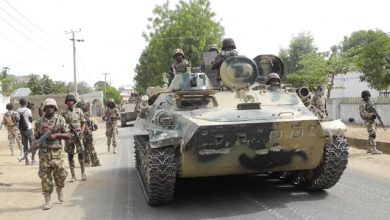
The military dimension of the relationship is also continuing to deepen. Discussions on military-to-military cooperation continued at the Pentagon following the JWG session, reflecting the increasingly practical character of the bilateral security relationship.