
It is no gainsaying that anyone tasked with coordinating Nigeria’s response to insecurity carries a burden few would envy. The country’s security challenges are vast, complex and deeply entrenched. Yet, despite these realities, the past two years have witnessed measurable progress in confronting some of the most violent criminal networks operating across the country.
In Nigeria’s North-West, where banditry once paralysed communities and disrupted daily life, several of the most notorious criminal leaders have been neutralised by government forces. Among those taken out in coordinated operations are bandit kingpins such as Kachalla Sani Black, along with members of his network, Baleri Fakai and dozens of his fighters, Halilu Sububu, the terrorist leader linked to deadly attacks including the assault on a military base in Katsina in 2021, as well as Halilu Buzu, Sani Wala Burki, and Kachalla Ibrahim Gurgun Raji.
The removal of these figures is a deliberate counter-terrorism approach often described as the decapitation strategy. The strategy targets the leadership structures of criminal organisations with the knowledge that when the leadership of violent networks is dismantled, their command systems collapse, their supply lines weaken, and their ability to regroup becomes severely constrained. Camps become disorganised, resources shrink, and the machinery of violence begins to stall.
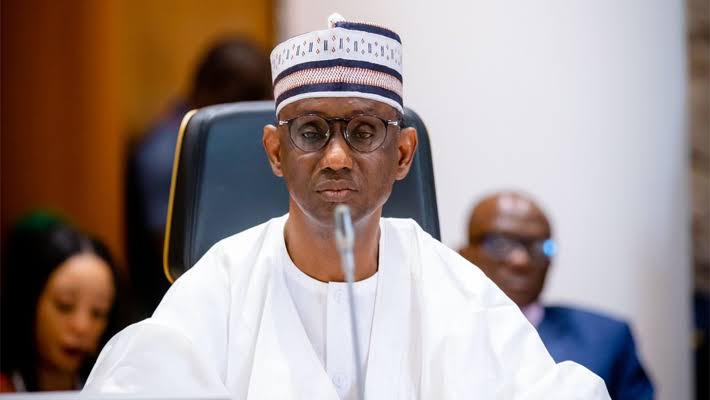
Much of the progress recorded in recent months has been driven by improved intelligence coordination, stronger collaboration among security agencies, and renewed investment in the operational capacity of Nigeria’s armed forces. At the centre of this coordination sits the National Security Adviser, Mal. Nuhu Ribadu.
Yet, paradoxically, the more visible the progress against insecurity becomes, the more determined some critics appear to be in manufacturing controversy.
Last week, a group of social media opportunists attempted to distort remarks made by the National Security Adviser after a high-level African counter-terrorism meeting. In the full exchange, Mal. Ribadu had been responding to a journalist’s question on whether the government would ever consider negotiations with terrorists.
His response was straightforward: if individuals genuinely surrender and renounce violence, the government would consider their repentance. To illustrate the point, he used a simple metaphor: that within any family, a member who goes astray but later returns remorseful is often given a chance to change.
But that was only part of his answer.
Earlier in the same exchange, Mal. Ribadu went on to outline how the government under President Bola Tinubu has intensified military pressure against terrorist leaders and criminal gangs. He listed several notorious figures who had already been eliminated by security forces.
Those mischief-makers who circulated the clip online carefully removed this crucial context. What remained was a deliberately shortened fragment of his remarks, presented in a way that falsely suggested he was sympathetic to terrorists. The distortion was as calculated as it was dishonest.
In the full remarks, Ribadu made it clear that the current security effort has delivered results rarely seen before, with so many terrorists and their leaders eliminated. As he put it:
“There has never been a time when terrorist leaders were eliminated like in this period. Today, where is Ali Kachalla? Wasn’t he the one who attacked Gusau University and abducted students? Where is Gwaderi? Where is Damina? Where is Dangote? We don’t necessarily have to talk about everything. Some operations are carried out quietly without publicity.
Places you couldn’t even step into before, not even during the day—now you can travel by road from Kaduna to Kano at night. Between 2022 and 2023, everyone knows that was simply impossible. The insecurity around Abuja, Lokoja, Nasarawa and Niger State up until 2022 was severe.”
To isolate a single sentence from a broader explanation and weaponise it for online outrage is certainly manipulation. Sadly, such behaviour has become a familiar feature of the social media age. Digital platforms that should enrich public discourse are often abused to distort facts, inflame emotions, and construct narratives detached from reality.
For Mal. Ribadu, however, misrepresentation is hardly new. His public career has long placed him in the crosshairs of those whose interests are threatened by accountability.
When he served as chairman of the Economic and Financial Crimes Commission (EFCC), his anti-corruption campaigns made him powerful enemies. Today, as National Security Adviser, confronting terrorists and organised criminal networks inevitably provokes similar hostility.
Those who profit from insecurity rarely applaud the people working to end it.
Mal. Ribadu’s record suggests that criticism has never deterred him from difficult assignments. I recall his address at the Arewa Consultative Forum in Kaduna last year, where he methodically outlined the security forces’ successes against terrorist commanders. Name after name was listed—from Kachalla Boka to Dogo Isah, from Halilu Sububu to Buhari Alhaji Halidu, also known as Buharin Yadi—accompanied by visual evidence of their elimination.
It was a reminder that behind the statistics that Mallam Ribadu shares are coordinated operations carried out by soldiers risking their lives daily.
The work of the National Security Adviser extends beyond battlefield coordination. It also involves managing the international partnerships that shape Nigeria’s ability to confront modern security threats.
At one point, Nigeria’s relationship with the United States faced serious strain following lobbying campaigns by mischievous irredentists that alleged widespread religious persecution and pushed for punitive diplomatic measures.
At that critical moment, Mal. Ribadu led the effort to stabilise the relationship. He undertook a series of high-level diplomatic engagements in Washington, meeting senior officials across the American security establishment. These included consultations with Antony Blinken, Jake Sullivan, and officials within the United States Department of State and United States Department of Defense.
He also engaged leaders within the Federal Bureau of Investigation, the Central Intelligence Agency and the United States Africa Command to deepen cooperation in intelligence sharing, counter-terrorism operations and regional security.
Those engagements have since translated into stronger operational collaboration between the two countries, including enhanced training programmes for Nigerian security personnel and expanded intelligence cooperation in the fight against terrorism.
For his efforts, Mal. Ribadu continues to enjoy the confidence of the president. During a recent engagement in Adamawa State, President Tinubu publicly acknowledged his work, praising him as “honest, bold, courageous and committed,” and expressing confidence that Nigeria would ultimately defeat banditry and terrorism.
“I must say it clearly here that you’re doing an excellent job, and we are seeing the result. With you, we will defeat the bandits and terrorists. You’re a good National Security Adviser; honest, bold, courageous and committed to the job. I believe the state of Adamawa is strongly, strongly proud of you, because I am too,” President Tinubu said.
Nigeria’s security challenges are far from over. No serious observer would claim otherwise. But progress is visible, and it is the product of deliberate strategy, sustained coordination and political commitment.
Critics will continue to speak. Social media distortions will continue to circulate. False narratives often travel faster than facts. But facts, unlike rumours, endure.
And one fact is increasingly difficult to dispute: in the fight against terrorism and banditry in Nigeria today, Mallam Nuhu Ribadu has become one of the most consequential adversaries these criminal networks face.
They are clearly not his brothers.
— Mr Mohammed Abiodun is a historian, and a writer who lives in the FCT.