
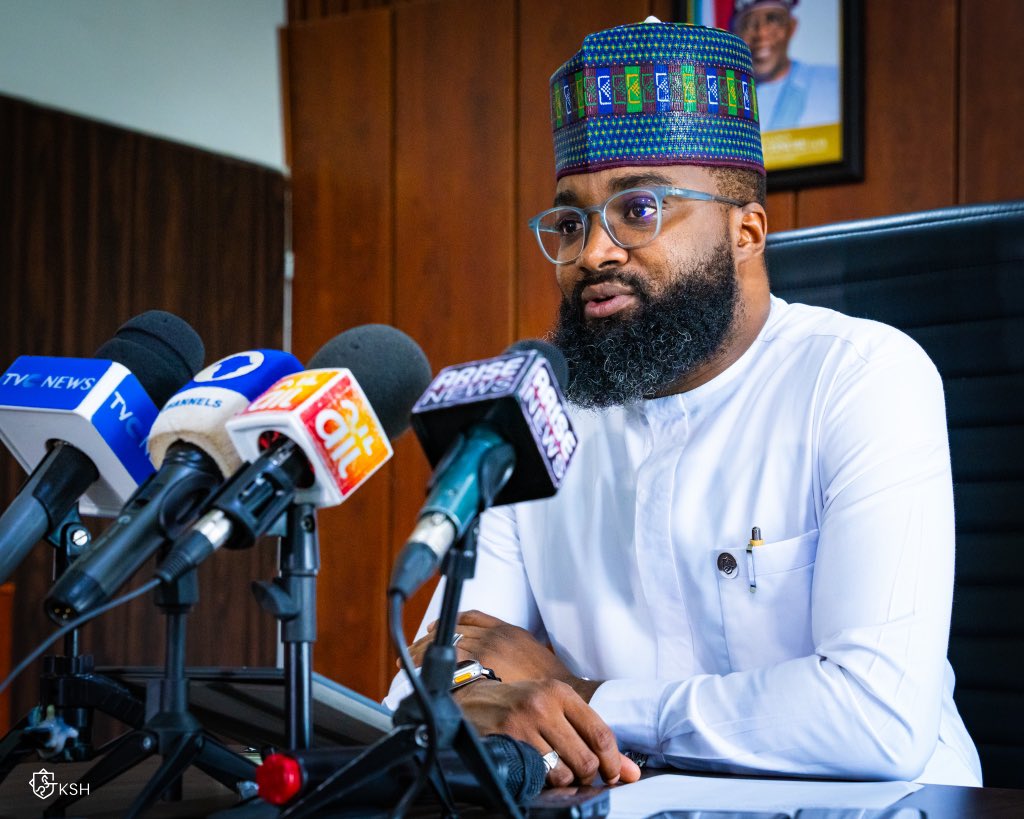
When the African Leadership Magazine named Khalil Halilu its Young African Leader of the Year, it did more than honour a man. It named a problem, and pointed to someone solving it.
There is a particular kind of leader Africa has always needed but rarely celebrated. Not the orator. Not the career politician who masters the choreography of power without ever bending it toward production. Not the consultant who diagrams transformation in PowerPoint while the factory floors stay empty. Africa needs the industrialist—the person who looks at raw materials, idle hands, and imported goods and asks: why are we not making this ourselves?
That question, deceptively simple and historically unanswered, is the one Khalil Halilu has chosen to build his life’s work around. And in March, the African Leadership Magazine—a UK-based pan-African publication devoted to leadership, governance, innovation, and sustainable development across the continent—decided that work was worth naming. At thirty-five, Halilu was announced as the magazine’s Young African Leader of the Year.
It is the right award, at the right time, for the right reasons.
To understand why this recognition matters, one must first understand the depth of what it is responding to.
Africa’s defining crisis is not only poverty, or infrastructure, or even the colonial inheritance of extractive economies—though all of these are real and compounding. Africa’s defining crisis is a deficit of the right kind of leaders. Leaders who build rather than broker. Leaders who create institutions rather than inhabit them. Leaders who understand that development is not a speech but a supply chain.
This deficit is structural. There are too few programmes that cultivate leadership talent at scale, too few mentorship pipelines that pass the lessons of institution-building from one generation to the next, too few institutional frameworks that reward the long, unglamorous work of making things. And so the continent keeps producing leaders fluent in the language of governance but mute in the grammar of production.
What makes the African Leadership Magazine’s mission vital is precisely this gap it seeks to address. When it identifies and honours young leaders who are genuinely making their mark, it signals to a continent of young people—many of them watching, wondering if ambition pointed toward building is worth pursuing—that this is what leadership looks like. This is the template. And Khalil Halilu fits that template almost by design.
Before arriving at the man, one must understand the country and the moment he is working within.
Nigeria is Africa’s largest economy and its most populous nation. It is also, paradoxically, one of the world’s most dramatic examples of a country that produces raw materials for others to refine and return to it as finished goods. For decades, crude oil has dominated the country’s export earnings while manufacturing has contributed less than ten percent of GDP. The consequences are dire. Every Naira spent on imported finished goods is a Naira that does not circulate through a domestic factory, does not pay a Nigerian worker’s wage, does not train a Nigerian technician, does not build a Nigerian supply chain.
Nigeria does not just need better governance. It needs a class of industrialists—people who will establish factories, process raw materials locally, create the backward and forward linkages that multiply economic activity, and build the technological capabilities that allow a nation to compete on the basis of what it produces rather than what it extracts. Without such a class, Nigeria risks a future of perpetual consumption without production: a large, youthful population consuming goods it cannot make, growing restless in an economy that cannot absorb it.
This might sound alarmist, but it is our current trajectory.
The encouraging sign—the one that makes this moment genuinely different from previous decades of the same diagnosis—is that industrialisation is beginning to be proven possible at scale. Aliko Dangote, through his cement plants, fertiliser operations, and now the landmark Dangote Refinery, has demonstrated from the private sector that Nigerian industry can compete, can scale, and can reshape national economic architecture. What Dangote has shown the country from the vantage of private capital, Khalil Halilu is now attempting to demonstrate from the vantage of the state.
NASENI—the National Agency for Science and Engineering Infrastructure—is not a new institution. It has existed for years, carrying a mandate that was always ambitious: to provide Nigeria with the science and engineering infrastructure necessary for indigenous industrialisation and technological self-reliance. Its three-pillar structure was designed to bridge the gap from import dependence to local production, build engineering complexes and research capacity through its network of twelve Development Institutes, and fund these activities through its own commercial earnings.
The problem was execution. For much of its institutional life, NASENI’s outputs remained largely on the shelf—prototype products, research reports, and engineering designs that never completed the journey from laboratory to market. The mandate was right. The delivery fell short.
When Khalil Halilu took the helm, his first act was an overhaul—a rebranding and repurposing of the institution to make it actually serve the mandate it was created for. This is harder than it sounds. Institutional inertia is one of the most powerful forces in public administration. Organisations develop cultures that resist change, bureaucracies that outlast reformers, and incentive structures that reward process over outcome. To break that inertia in a federal agency requires not just vision but a very specific kind of stubbornness—the refusal to accept the gap between what an institution is supposed to do and what it actually does.
Khalil’s answer to that gap is captured in what he calls the 3Cs: Creation, Collaboration, Commercialisation.
Creation means NASENI must continue developing homegrown technologies and engineered solutions. Collaboration means it can no longer work in isolation—it must build active partnerships with private firms, universities, startups, investors, and international partners. And Commercialisation—the single most important of the three—means research must stop ending as reports and prototypes. It must become products: things people can buy, use, deploy, and scale.
The logic is disciplined and unforgiving in the best way. As Halilu has framed it, the whole essence of research is to transform it into meaningful products that impact the economy. Under his leadership, NASENI’s new direction is to take products to market through technology transfer, making the agency an institutional bridge between research, production, and market adoption.
The most compelling answer to scepticism is results. And here, NASENI under Khalil Halilu has begun to build a record.
In the first half of 2024 alone, the agency unveiled a portfolio of products whose breadth is remarkable for a public institution. The May 2024 launch brought four headline commercial products to market: the NASENI Laptop, an Android Smartphone, a Lithium Battery, and a 300-watt LED Solar Street Lamp. These were market-ready, SON-certified products, some already pre-booked before the launch date.
But the product push went well beyond electronics. NASENI’s broader commercialisation offensive included a Solar Irrigation System, Electric Keke vehicles in both passenger and cargo configurations, an Electric Motorcycle, a Solar-Powered Cargo Tricycle, and an Electric Bicycle. A subsequent showcase to the House Committee added Electric Transformers and newly branded Electric Vehicles to the list. By June 2024, Halilu was speaking of approximately thirty-five products ready for market and plans for showrooms across all thirty-six states.
Further along, NASENI’s energy portfolio expanded to include Solar Home Systems, Solar Panels, a Portable Solar Generator, Smart Prepaid Meters, multiple Power Stove variants, animal feed milling machines, and CCTV equipment. These are without doubt solutions to Nigerian realities—the power deficit, the agricultural productivity gap, the transport cost burden, the import dependency on finished consumer goods.
The product range reads like a map of Nigeria’s most persistent structural vulnerabilities, drawn not by a diagnostician but by an engineer who intends to fix them.
Return, then, to the African Leadership Magazine’s recognition, and why it lands with the weight it does.
The award is not merely for product launches or institutional rebrandings. It is for what those things represent: a young leader who understood his brief and chose to answer it fully. Khalil Halilu did not take a comfortable position at the head of a government agency and use it to manage perceptions. He used it to transform an institution, argue publicly for the centrality of industrialisation to Nigeria’s future, build partnerships that NASENI had never built before, and put products in the market that carry the nation’s name.
Khalil Halilu exemplifies something Africa needs urgently and recognises too rarely: the industrialist-in-public-service. The person who brings the urgency of a builder, the patience of an engineer, and the strategic mind of an institutional reformer to bear on a national challenge that will not be solved by speeches alone.
Leadership matters in Africa because everything else flows from it. The right programmes, the right talent pipelines, the right mentorship—all of these depend on the prior existence of leaders who model what building looks like. Khalil Halilu, at thirty-five, is already doing that modelling. What NASENI is becoming under his watch is a proof of concept: that government-led industrialisation is not just aspiration. It is achievable.
Africa has had no shortage of promising young leaders who inspired and disappointed. What sets this recognition apart is that it is for a young leader who is not just promising—he is already delivering.
The African Leadership Magazine has named its Young African Leader of the Year. Nigeria, and the continent, would do well to study not just the honour, but the work behind it.
– Mohammed Abiodun is a historian, and writes