
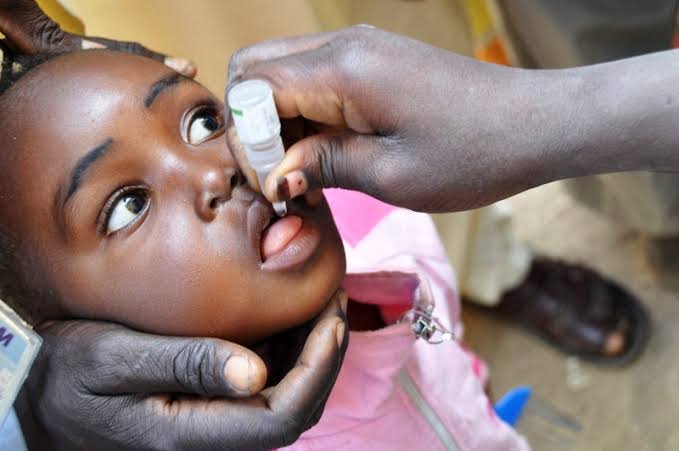
The National Economic Council has approved the expansion of its ad hoc committee on polio eradication to include seven additional high-risk states as part of renewed efforts to eliminate the disease in Nigeria.
The decision was taken at the 157th meeting of NEC, chaired virtually by Vice President Kashim Shettima.
In a statement signed by Stanley Nkwocha, Senior Special Assistant to the President on Media and Communications, Office of the Vice President, the Council said the additional states are Jigawa, Kaduna, Bauchi, Niger, Yobe, Borno and Adamawa.
The expansion, according to NEC, is aimed at strengthening political oversight, improving coordination, enhancing accountability and accelerating progress toward polio eradication across high-risk states.
The Council had received a presentation from Governor Inuwa Yahaya of Gombe State on the work of the NEC ad hoc committee on polio eradication in Nigeria.
NEC noted the ongoing interventions across the country, particularly efforts to strengthen political commitment and coordination in the campaign against polio.
The Council was informed that a second group of 12 states — Adamawa, Bauchi, Borno, Jigawa, Kano, Kaduna, Katsina, Niger, Sokoto, Yobe, Kwara and Nasarawa — would begin vaccination activities from May 2.
The committee urged state governments to direct their health teams to provide targeted support and oversight to ensure that all eligible children are reached during the campaign.
It also called on governors to ensure they are regularly briefed on the progress of the vaccination exercise.
NEC approved the expansion of the committee, saying the move would ensure full political oversight across all high-risk states and strengthen the push to completely eradicate polio in Nigeria.
Polio Eradication in Nigeria
Nigeria was declared free of wild poliovirus (WPV) in August 2020 after no cases were recorded since 2016. However, the country continues to battle outbreaks of circulating vaccine-derived poliovirus type 2 (cVDPV2). Efforts are ongoing to maintain zero wild polio cases and eliminate cVDPV2 through mass immunization with the novel oral polio vaccine (nOPV2).