
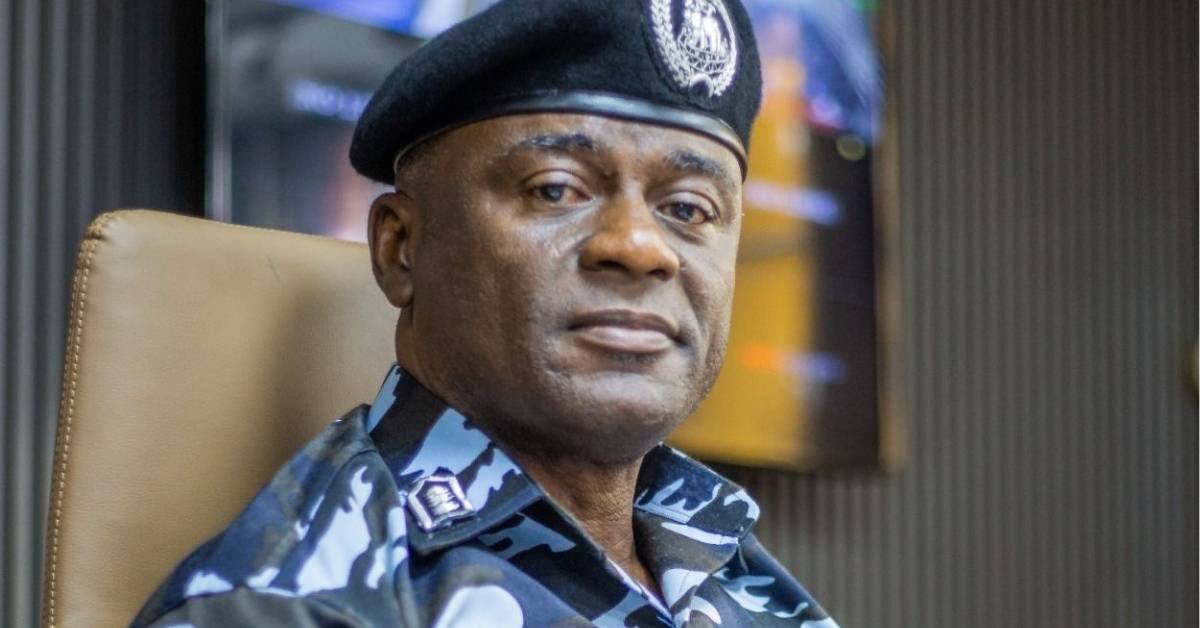
The Inspector-General of Police (IGP), Tunji Disu, on Monday formally inaugurated a Committee on State Policing, charging its members to develop a comprehensive framework that could redefine Nigeria’s internal security architecture and bring law enforcement closer to local communities.
At his first engagement with senior officers following his confirmation as the 23rd Indigenous Inspector-General of Police, Disu described the task before the committee as “significant and timely,” noting that Nigeria’s evolving security challenges demand innovative thinking, strategic collaboration, and well-structured reforms.
The inauguration marks a renewed institutional push on the long-debated proposal for state policing. The President has recently urged the National Assembly to enshrine the reform in law by amending the Constitution to provide a legal framework for its establishment, arguing that decentralised policing is essential to tackle Nigeria’s evolving security threats.
Addressing senior officers, stakeholders and invited guests at the inauguration ceremony, the IGP said the committee’s work would help shape a framework “through which state policing may operate in Nigeria in a manner that strengthens rather than fragments our national security system.”
“Across the nation, we continue to confront evolving security challenges,” Disu said. “These require innovative thinking, strategic collaboration and a willingness to explore reforms that will enhance our capacity. Your work will help shape the framework for state policing in Nigeria.”
He outlined the committee’s core responsibilities to include reviewing existing policing models within and outside Nigeria, assessing community security needs and emerging risks, and proposing an operational structure for the establishment and coordination of state police formations.
The committee is also expected to address recruitment processes, training standards, funding mechanisms, and resource allocation, while developing “robust accountability and oversight mechanisms to ensure professionalism and public trust.”
Disu emphasised that any eventual state policing arrangement must complement, not undermine, the constitutional mandate of the Nigeria Police Force (NPF).
“The Nigeria Police Force will continue to play its constitutional role as the primary national law enforcement institution responsible for maintaining internal security across the Federation,” he said. “State policing, if adopted, should complement federal policing by allowing the federal police to concentrate more strategically on complex and transnational crimes such as terrorism, organised crime, cybercrime, trafficking networks and other serious security threats that require national coordination and specialised capacity.”
Seeking to reassure officers amid concerns about possible overlap or erosion of authority, the IGP declared that the vision was “one of synergy, not competition — partnership, not duplication.”
He urged members of the committee to approach their assignment with diligence and intellectual rigour, stressing that public expectations are high.
“The expectations of Nigerians are high, and the outcome of your work will play a significant role in shaping the future of policing in our country,” he said.
Responding to questions after the inauguration, Disu disclosed that the committee has been given four weeks to submit its report.
“The committee has four weeks to complete its work and present its recommendations,” he said.
On concerns that state police could be abused by subnational authorities, the IGP acknowledged public fears but assured that the committee’s deliberations would take them into account.
“We are meeting with a lot of people. That is the task of the committee. All these fears will be taken into consideration in the framework,” he said, adding that Nigeria would draw lessons from other jurisdictions. “Nigeria is not the first nation that will be operating state police. A lot of comparative analysis will be done.”
The committee’s recommendations are expected to contribute to ongoing national conversations on security reform, federalism, and the balance between central authority and state autonomy in policing.