
Business
Nigeria Ports Records 19.5% Growth in Vessel Tonnage as Cargo Throughput Hits 32.38m Tons in Q1 2026

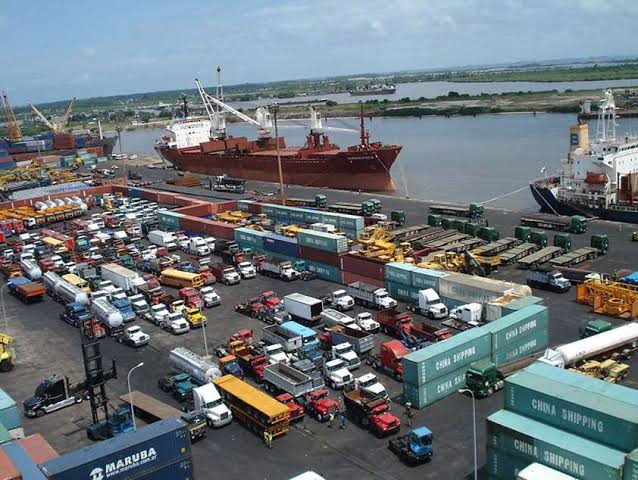
Nigeria’s maritime sector sustained strong operational momentum in the first quarter of 2026, with the Nigerian Ports Authority (NPA) recording a 19.5 per cent increase in Gross Registered Tonnage (GRT) for ocean-going vessels, driven by the growing deployment of larger-capacity ships across the nation’s seaports.
According to the NPA’s Q1 2026 Operational Performance Review, total GRT rose to 46.75 million during the period, reflecting increased cargo-carrying efficiency and rising confidence among global shipping lines in Nigeria’s port system.
The authority said the growth underscores a gradual shift toward the use of larger and more efficient vessels, supported by expanding trade activities and the operational impact of the Lekki Deep Sea Port.
The report comes amid ongoing federal government reforms aimed at modernising port infrastructure, improving cargo handling efficiency and positioning Nigeria as a major maritime and logistics hub under the African Continental Free Trade Area (AfCFTA).
Managing Director of the Nigerian Ports Authority, Dr. Abubakar Dantsoho, had recently stressed the need for Nigeria’s ports to evolve beyond traditional operational limitations to remain competitive in Africa’s emerging continental trade environment.
Speaking at an industry forum in Lagos, Dantsoho said efficiency, speed, innovation and reliability would determine the countries that dominate cargo flows under AfCFTA.
“The time has come for a paradigm shift in the structure of Nigeria’s economy towards the full utilisation of our marine resources. Our port system, if properly harnessed, can serve as a major driver of economic growth,” he said.
The NPA report also showed that total cargo throughput, excluding crude oil terminals, increased by 11.6 per cent year-on-year to 32.38 million metric tons in Q1 2026, compared to 29.02 million metric tons recorded in the corresponding period of 2025.
According to the authority, the growth was driven by stronger import and export activities, improved port productivity and sustained demand for port services.
Outward cargo traffic emerged as one of the strongest-performing segments during the quarter, rising by 23.7 per cent to 14.13 million metric tons, an indication of improving export competitiveness and deeper integration into regional and global supply chains.
Similarly, outward laden container traffic surged by 67.6 per cent, increasing from 61,332 TEUs in Q1 2025 to 102,803 TEUs in the first quarter of 2026.
The report linked the sharp increase to improved export logistics and enhanced terminal efficiency across Nigerian ports.
Vehicle traffic also recorded substantial growth during the period, with total vehicle units handled rising by 67 per cent to 58,870 units, compared to 35,262 units recorded in Q1 2025.
In addition, transshipment container activity increased by 83.1 per cent, a development industry analysts say reinforces Nigeria’s growing importance within regional maritime trade and logistics networks.
Analysts noted that rising transshipment volumes suggest Nigeria is gradually attracting more regional cargo movement within West Africa, a critical objective as AfCFTA continues to reduce trade barriers across the continent.
The maritime reform programme under the administration of President Bola Ahmed Tinubu has focused on infrastructure upgrades, digitalisation and institutional reforms aimed at strengthening Nigeria’s competitiveness in the global maritime sector.
A key component of the reforms is the planned rehabilitation of the Lagos Port Complex and Tin Can Island Port following the approval and signing of a Memorandum of Understanding for a $1 billion infrastructure overhaul designed to address longstanding port deficiencies and improve operational efficiency.