Opinion
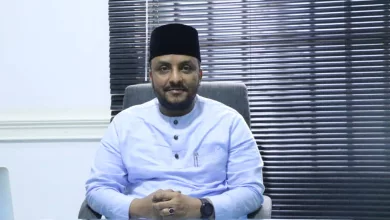
The Philosopher, The Salesman and The Ambassador–Ambassador Tuggar’s Legacy as Foreign Affairs Minister
By Eyimofe Amajuoritse


Part Two
In the second part of this two-part series, I continue my dissection of what I consider the most profound legacies from the three years Ambassador Yusuf Maitama Tuggar spent as Nigeria’s Minister of Foreign Affairs—a period marked by consequential foreign policy choices that projected Nigeria to the forefront of key global conversations, while ensuring that, despite constrained resources, the country remained visible and credible within the comity of nations.
Those who worked closely with him during his tenure will say, without hesitation, that Ambassador Tuggar is a man of unusual intellect. His depth of insight, vast reservoir of knowledge, and unmistakable grit recur in nearly every conversation I have had with those familiar with his work.
In this concluding part, I examine three additional elements that stood out during his tenure: the conception and deployment of the 4D Doctrine; his role as Nigeria’s foremost salesman on the global stage; and how he advanced Nigeria’s interests within the international community.
Ambassador Tuggar and the 4D Doctrine
Every country’s foreign policy must be anchored on a philosophical framework—one that reflects its domestic realities and aligns with its long-term developmental aspirations. It was on this premise that Ambassador Tuggar conceptualised Nigeria’s 4D Doctrine as a unifying policy architecture.
What did the 4Ds represent? Democracy, Development, Demography, and Diaspora.
Under the Democracy pillar, Nigeria positioned itself as a democratic state as much as a regional advocate for democratic consolidation. This aligned with Nigeria’s longstanding role within West Africa, particularly through its leadership in institutions such as ECOWAS, where it has historically intervened—diplomatically and otherwise—to preserve constitutional order. It was within this context that Nigeria lent support to initiatives such as the Regional Partnership for Democracy, aimed at strengthening democratic institutions across Africa through locally grounded approaches.
The second pillar, Development, reflected the country’s deliberate deliberate shift toward economic diplomacy. Ambassador Tuggar’s tenure coincided with Nigeria’s broader reform agenda under President Bola Ahmed Tinubu, including efforts at macroeconomic stabilisation, foreign exchange unification, and investment promotion. Consequently, Nigeria’s diplomatic engagements became more targeted—focused on trade expansion, investment attraction, and strategic partnerships capable of delivering tangible economic outcomes.
The third pillar, Demography, recognised Nigeria’s population—projected to become the third largest globally by 2050—as both an opportunity and a strategic asset. This dimension of the doctrine framed Nigeria not only as a vast consumer market but also as a future labour hub in a world facing demographic decline in advanced economies.
Finally, the Diaspora pillar sought to recast Nigerians abroad as critical stakeholders in national development. With remittance inflows consistently exceeding $20 billion annually—often surpassing foreign direct investment—the Nigerian diaspora was repositioned as an economic force, a soft-power asset, and an extension of Nigeria’s global influence.
The 4D Doctrine provided coherence to Nigeria’s foreign policy by directly linking diplomatic engagement to national development priorities. It was, in essence, a pragmatic framework—one that fused idealism with economic realism.
Ambassador Tuggar: The Salesman
If diplomacy is, at its core, the art of persuasion, then Ambassador Tuggar distinguished himself as one of the most effective communicators within the administration of President Bola Ahmed Tinubu.
Across multiple global platforms, he consistently articulated Nigeria’s policy direction, often with clarity and conviction. His appearances at institutions such as Chatham House in London—where he engaged policymakers and investors—were particularly notable. There, he advanced Nigeria’s doctrine of “strategic autonomy,” arguing for a foreign policy that avoids rigid alignment while maximising national interest in an increasingly multipolar world.
He also used such platforms to reiterate Nigeria’s longstanding advocacy for reform of global governance structures—making the case for Africa’s representation on the United Nations Security Council and arguing for more equitable international financial systems. These positions were not new, but under his stewardship, they were communicated with renewed coherence and urgency.
Similarly, at the World Economic Forum in Davos, Ambassador Tuggar projected Nigeria as a stabilising force in West Africa, while emphasising the country’s reform trajectory and openness to credible investment. These engagements played a subtle but important role in shaping global perceptions about Nigeria.
Perhaps more striking, however, was his responsiveness during moments of international scrutiny. When narratives emerged in parts of the Western media suggesting that Nigerian Christians faced systemic religious persecution or genocide—claims widely disputed by the Nigerian government—Ambassador Tuggar was among the most visible voices countering these assertions. Through appearances on major international media platforms, he consistently argued that such characterisations were based on incomplete or inaccurate data, and risked misrepresenting the country’s complex security challenges.
In doing so, he demonstrated a willingness—rare among public officials—to engage directly, and often robustly, with global opinion.
Particularly, on the occasion of the US–Nigeria coordinated airstrikes on terrorist locations in the northwestern parts of the country, Ambassador Tuggar appeared across major broadcast media platforms to clarify Nigeria’s position—from the early hours of the morning until late in the day. He was first on Channels TV, then on CNN; thereafter, he appeared on Al Jazeera and the BBC, before ending the day on Arise TV.
Nigeria’s Most Consequential Diplomat?
It is difficult to isolate a single “defining moment” from Ambassador Tuggar’s tenure. His impact was less about one dramatic event and more about sustained engagement—often under difficult circumstances.
Perhaps most telling was the period during which Nigeria operated without a full complement of appointed ambassadors. In many respects, this placed an extraordinary burden on the Ministry of Foreign Affairs. Yet, within these constraints, Ambassador Tuggar, supported by the diplomatic corps and career officials, managed to sustain Nigeria’s international engagements, navigate complex negotiations, and maintain the country’s diplomatic presence across key capitals.
Whether engaging counterparts in Turkey, the United Arab Emirates, or the United Kingdom ahead of presidential visits, or coordinating diplomatic activity from the Tafawa Balewa House in Abuja, he approached the role with a level of intensity that suggested a deep personal commitment to the craft of diplomacy.
For me, it has been hard taking a position on which of Ambassador Tuggar’s moments as Minister of Foreign Affairs was his finest. I was compelled to break down this article into two parts, because there was so much to talk about. But as I conclude, it dawns on me that Ambassador Yusuf Tuggar’s finest moments as Nigeria’s Minister of Foreign Affairs were those times he was simply being “Ambassador”.
To describe him as Nigeria’s most consequential diplomat of the past decade may invite debate—but it is a position not easily dismissed. Within a relatively short period, and with limited resources, he brought intellectual clarity, communicative force, and strategic direction to Nigeria’s foreign policy.
And perhaps that is the simplest way to understand his tenure: not just as a Minister, but as a philosopher who framed ideas, a salesman who sold Nigeria’s story, and ultimately, an ambassador in the truest sense of the word.
Eyimofe Amajuoritse is a journalist covering Nigeria’s foreign relations.