
There is a logic to how things fall apart—and an equally clear logic to how they are put back together. A tree that is dying does not need a better crown; it needs attention at the roots. Nigeria’s health care system has, for too long, received the opposite treatment: investment concentrated at the top, in federal teaching hospitals and specialist centres, while the foundation—the primary health care centres where most Nigerians first meet the health system—quietly crumbled.
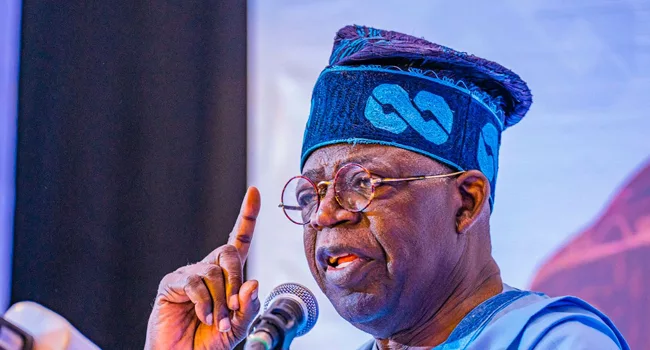
President Bola Ahmed Tinubu’s Renewed Hope Health Agenda is making a different bet. It is investing in the roots. And it is the right call.
Primary Health Care is not a lesser form of medicine, like many people think it is. It is the most important. It is where preventive care happens, where children receive their vaccines, where mothers receive antenatal attention, where chronic diseases are caught before they become crises. The World Health Organisation estimates that scaling up primary health care could save 60 million lives globally by 2030. In a country with Nigeria’s population and geography—vast, uneven, with millions living beyond the reach of hospitals—Primary Health Care does not just form a supplement to the country’s health system, but is invariably the health system.
This is why the President Tinubu administration’s decision to release N68 billion to the National Primary Health Care Development Agency for vaccine procurement and primary health care services matters so profoundly. The funding will procure between 18 and 35 million vaccine doses, covering measles-rubella, polio, and HPV vaccines in high-burden states.
It will also target the 7.4 million “zero-dose” children in Nigeria—children who have never received a single routine vaccination, largely because they live in communities that the system has not yet reached. House-to-house campaigns, mobile vaccination teams, and community outreach programmes will take the health system to them, rather than waiting for them to find it.
The N68 billion sits within a broader architecture of reform. More than N130 billion has been committed to the Basic Health Care Provision Fund in 2024 alone. Over 4,000 Primary Health Care Centres have been revitalised, with an additional 1,500 currently being upgraded across all geopolitical zones. These are not cosmetic. And here is why: Revitalised PHCs are receiving modern equipment, reliable electricity and water supply, medicines, and the capacity to offer 24-hour services. For communities where the nearest hospital may be hours away, this in fact may be the difference between life and death.
Yet infrastructure without people is an empty promise. The administration has trained over 60,000 frontline health workers—community health practitioners, midwives, primary health care facility staff—with a target of 120,000 in view. In many rural and underserved communities, these trained workers are the only healthcare providers within reach. Investing in their skills is investing in the communities they serve. It is also a direct response to the “japa” phenomenon—the migration of trained health professionals abroad—by building a deep, community-rooted cadre of health workers whose work is grounded in local service.
Accountability has not been left to chance. The National Health Fellows Programme has deployed one trained health fellow in each of Nigeria’s 774 Local Government Areas. Their mandate is clear: track the performance of PHC facilities, monitor the flow of health financing, and provide real-time data to federal and state authorities. This is transparency applied to health governance—ensuring that the money committed to primary health care actually reaches the people it is meant to serve, and that someone is watching to confirm it does
Critics may point to the distance still to travel. The challenges are real, and they are many. But the direction matters, and so does the reasoning behind it. Every serious country that has built a robust health system—from Thailand to Rwanda—built it from the ground up, anchoring the entire architecture in a strong primary health care foundation before scaling upward. Nigeria is, at last, doing the same.
The average Nigerian cannot afford to be flown abroad for medical attention. The average Nigerian cannot access a tertiary hospital in Lagos or Abuja from a rural community in Kebbi or Abia. What the average Nigerian can access—when it works—is the primary health care centre in their ward, the community midwife who delivers their child, the vaccination outreach that protects their family. These are the touchpoints that determine whether the health system is real for the majority of Nigerians, or merely theoretical.
Healing a nation’s health system, like healing a patient, requires attending to the fundamentals first. The President Tinubu administration is doing exactly that. It deserves both recognition and continued scrutiny recognition for making the right strategic choice, and scrutiny to ensure that the investment translates fully into improved outcomes for the Nigerians it is meant to reach.
The roots are finally getting water. What grows from here will depend on how faithfully the work continues.
Danjuma Alheri is a development expert working with a Non-Governmental Organisation in Northern Nigeria