
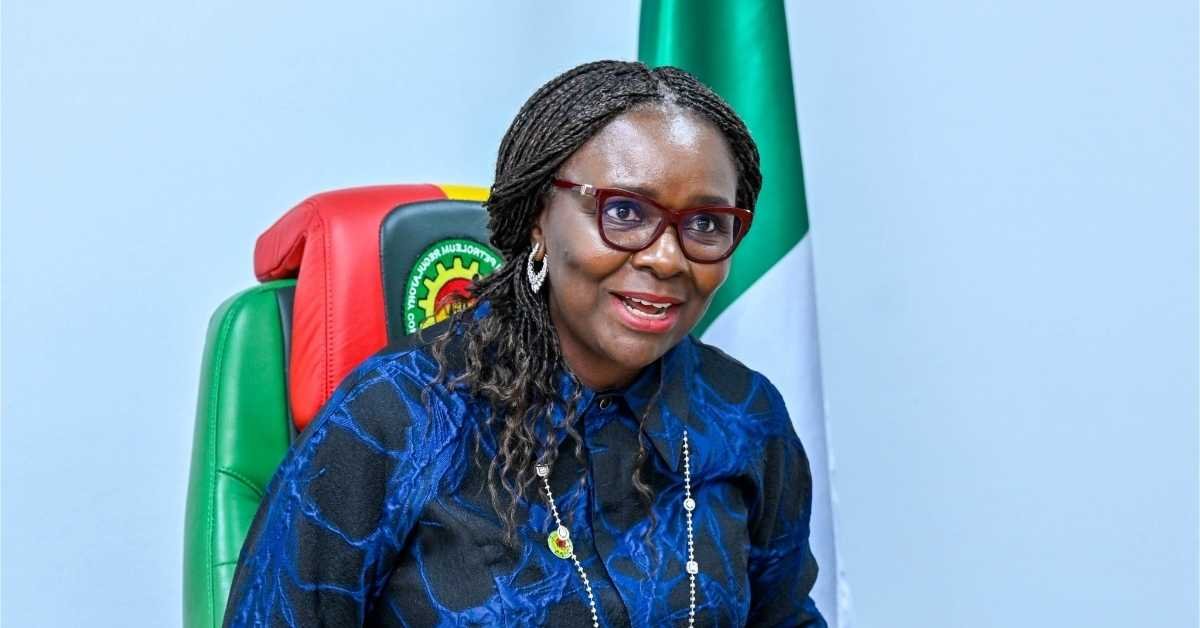
The Nigerian Upstream Petroleum Regulatory Commission has said weak coordination among stakeholders in the gas, power and financial sectors is slowing Nigeria’s efforts to resolve its long-running gas-to-power problems.
The NUPRC Chief Executive, Oritsemeyiwa Eyesan, made the remarks on Thursday during her goodwill message at the 2026 Gas-to-Power Sector Stakeholders’ Engagement held at the Afreximbank Africa Trade Centre in Abuja.
The event was themed, “Power Sector Sustainability: Framework Implementation Assurance.”
In a statement signed by its Head, Media and Corporate Communication, Eniola Akinkuotu, Eyesan said despite years of policy conversations, domestic gas supply frameworks and government-backed interventions, the country had made limited progress because critical players continued to operate in silos.
She recalled that discussions around the Domestic Gas solution began in 2008 and crystallised in 2009 as part of efforts to address gas supply constraints affecting electricity generation.
“We segregated part of our budget for domestic gas. And it was mainly focused on power,” she said. “We segregated for several years. The needle did not move. We’ve been working in silos.”
According to her, the disconnect between upstream producers, infrastructure developers and electricity distribution companies has continued to weaken implementation and delay results.
She said upstream gas supply had not been matched by supporting infrastructure, while electricity distribution companies had also failed to align effectively with other parts of the value chain.
The NUPRC boss said Nigeria’s 215 trillion cubic feet of gas reserves should have positioned the country as a major regional energy supplier, rather than one still struggling to meet domestic demand.
“Today, we shouldn’t be talking about meeting domestic needs. Today, what we should have been really describing is how to meet regional needs,” she said.
Eyesan also cautioned against institutional rigidity, excessive bureaucracy and policy grandstanding, warning that such practices would continue to undermine practical solutions.
“If we continue to grandstand, we won’t make progress. The country will suffer, the continent will suffer,” she warned.
She said Africa initially suffered a decline in oil and gas investments due to the global energy transition debate until gas became more widely recognised as a transition fuel.
Eyesan called for stronger collaboration, innovation and practical solutions to unlock Nigeria’s gas and power potential for national and continental development.
“If we don’t break those barriers, and come up with creative solutions, we will not make progress. Ten years from now, we will still be saying the same things, and it will be a big shame,” she said.
“My plea is that we break the silos, we break the barriers, and we come up with creative hands to provide lasting solutions to these critical problems that we must solve for Nigeria and Africa to make progress,” Eyesan added.